MARY’S JOURNEY OF HOPE THROUGH IGP SUPPORT

Life wasn’t easy for Tino Mary. After the collapse of her marriage, she sought refuge at her parents’ home, only to be driven away over bitter land conflicts with her brother. Forced into a small, rented room in a nearby trading center with her daughter, Anyango Mary struggled to stay afloat. Eventually, the weight of unpaid rent led to her eviction, leaving her dependent on the kindness of a well-wisher who was starting on the construction of a new home. He gave her a small space to construct a small grass thatched house behind the space where he was going to construct his house, on condition that she cooks for his workers. This is where she leaves to date.

In 2024, life started changing when Mary’s daughter, Anyango Cana, was enrolled in the Girl + program. This is how Mary was identified for an Income Generating Project (IGP), under the Girl+ economic empowerment programme, meant to improve household income. Mary was identified as a beneficiary, and she seized the opportunity to change her fate. With two goats valued at UGX 300,000 from Africa Water Solutions, she finally had a foundation to build on.
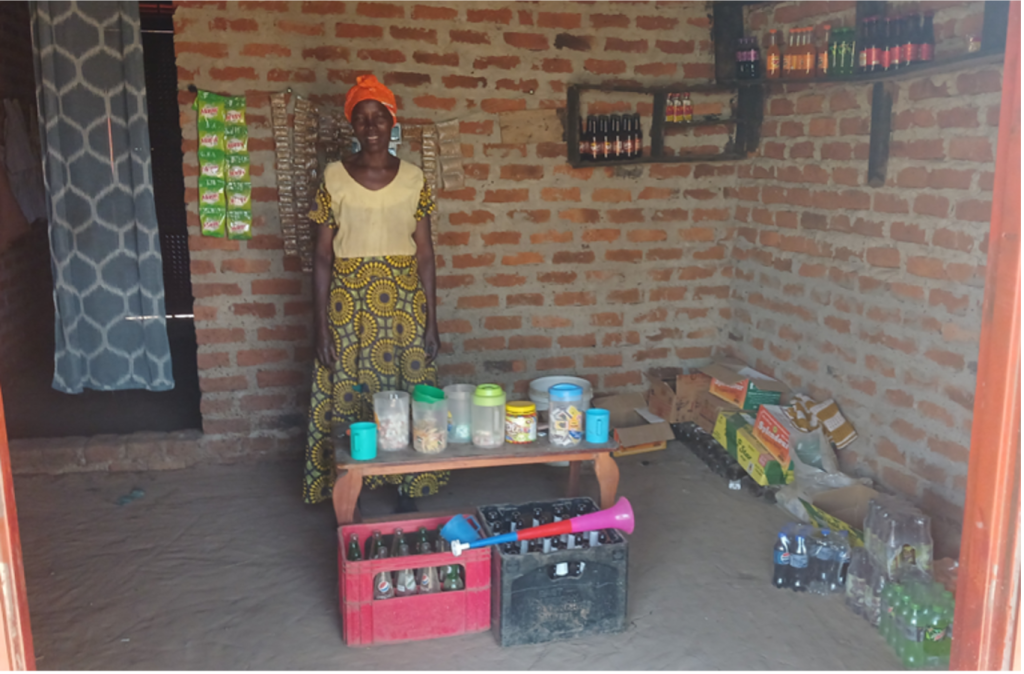
Mary stands infront of her shop items

Within four months, her doe gave birth, sparking a chain reaction of growth. She sold one of the goats for 250,000 shillings, more than double its initial value, and used the profit to diversify. She invested in rice growing, opened a small retail shop, and began paying down her loan.

Success followed her hard work. When the doe birthed a second kid, Mary sold the first kid for UGX 150,000. This money went straight back into her land, covering the costs of weeding her flourishing rice garden and paying off more UGX 100,000 to cover her loan balance.

Mary’s life has changed. She has a testimony concerning how Africa Water Solutions has transformed her life. She now provides consistent meals, covers the family’s medical bills, and saves UGX 12,000 every week through her savings group.

With her rice garden nearing harvest and her business thriving, Mary has her sights set on one goal: buying her own plot of land this year. She is no longer just looking for shelter; she is planning to build a permanent home for herself and her daughter, ensuring that Anyango Cana never has to face the instability her mother once did.
Gad Niringiyimana

Gad's story

Gad Niringiyimana is a husband, a father of four and a resident of Gisasa Village in Kisoro District. Today, he is known as a sanitation leader in his community. But not long ago, his own home told a very different story.

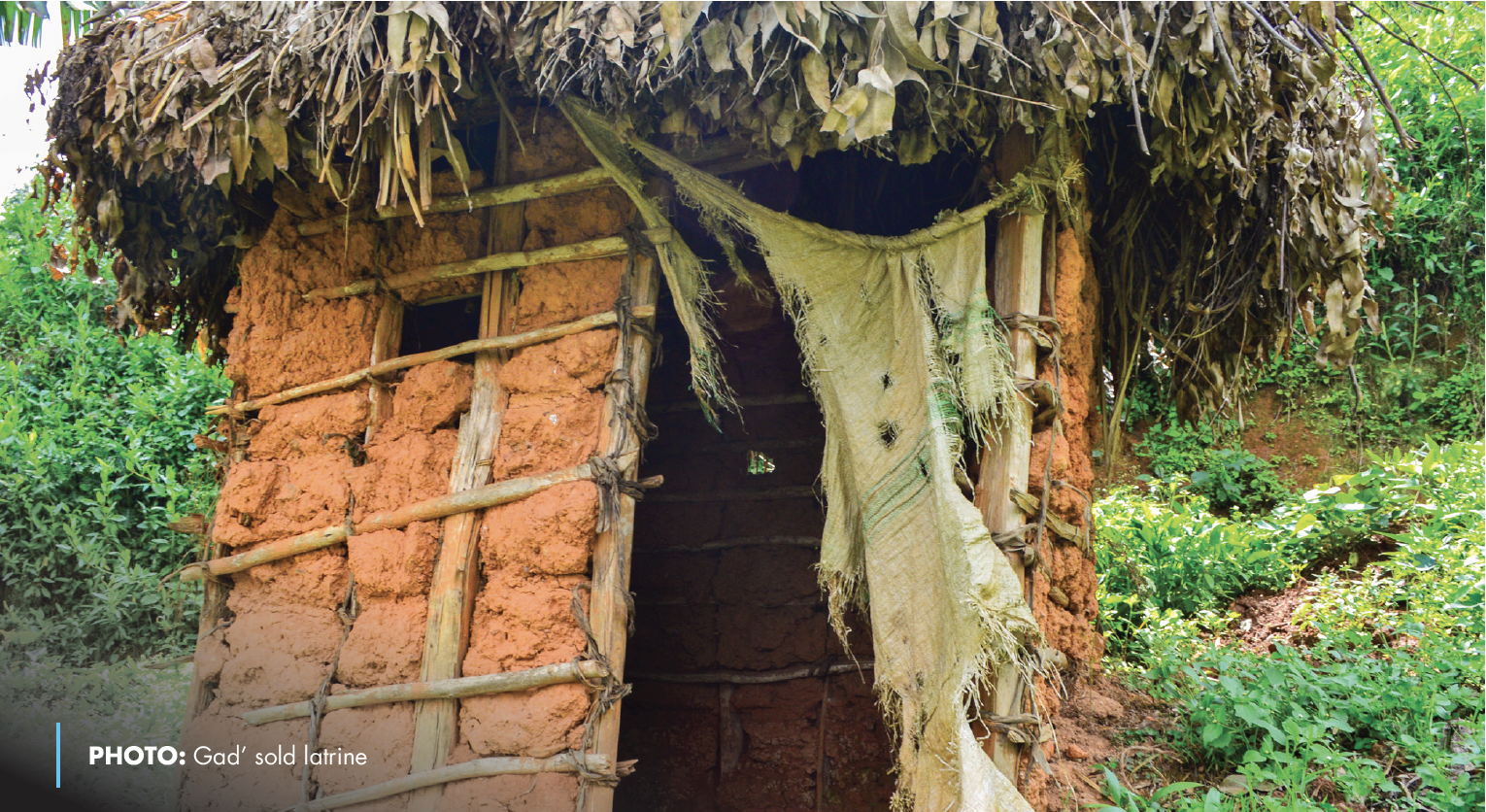
Before Africa Water Solutions began working in his village, Gad’s family used a grass-thatched pit latrine that was poorly built and unsafe. The walls and floor had holes, and it was hard to tell where one was even meant to squat. The household had no bath shelter, no dish rack and no basic facilities to support good hygiene. Like many families, Gad worked hard every day, but sanitation was not something he had given much thought to, simply because he did not know better.


Everything changed during a community sanitation meeting. As people openly discussed the health risks of poor sanitation, Gad felt deeply ashamed. He remembers wanting to leave the meeting, but instead, he made a quiet promise to himself – his family would never live like this again.


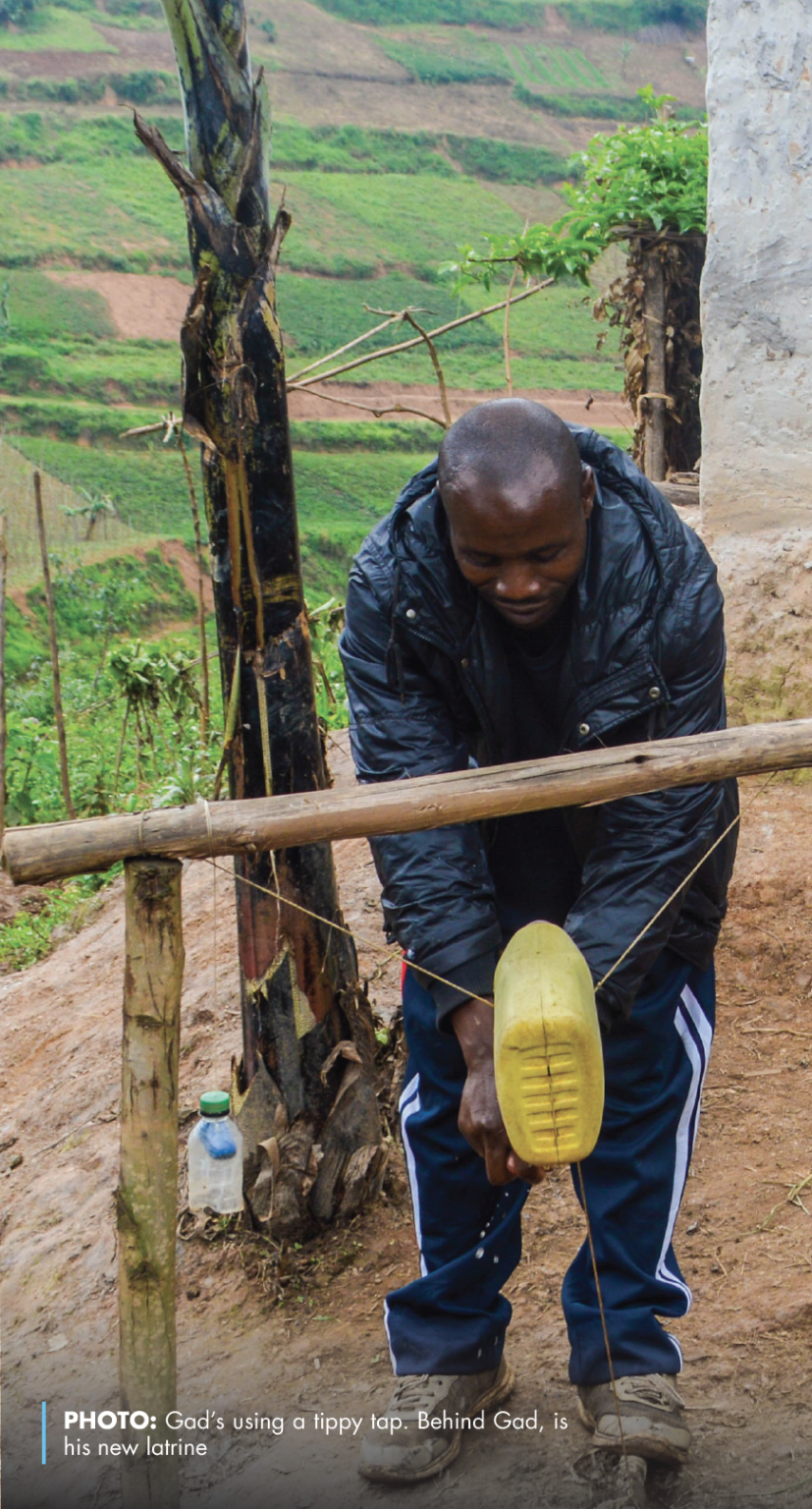
After, Gad was chosen by his neighbours to serve as Chairperson of the Village WASH Committee. The trust placed in him pushed him to act. He went home and immediately began digging a new pit latrine. This time, he took care to build it properly; neatly mudded, well finished, fitted with a satopan and safely shuttered. He also built a

Gad's old latrine

bath shelter for the first time. His home quickly became an example that others could see and learn from.

Gad did not keep this change to himself. With support from the AWS team, he trained his wife and children in good sanitation and hygiene practices, ensuring the improvements at home would last. He then reached out to his neighbours, working closely with other WASH committee members and AWS staff to encourage households to improve their habits and facilities.

By leading through example, rather than words alone, Gad helped his village move forward together. Over time, Gisasa Village achieved Open Defecation Free status, a moment of pride for the entire community.

When asked what this journey meant to him, Gad said, “If Africa Water Solutions had not come, I would still be in darkness. Now grace has covered me, and my eyes are open. Kahangare AWS! (meaning Long live Africa Water Solutions).”

Today, Gad is not just a WASH chairperson; he is a role model. His story shows how knowledge, encouragement, and community leadership can turn shame into confidence, and simple actions into lasting change. Through people like Gad, Africa Water Solutions continues to support families and villages to live healthier, more dignified lives.

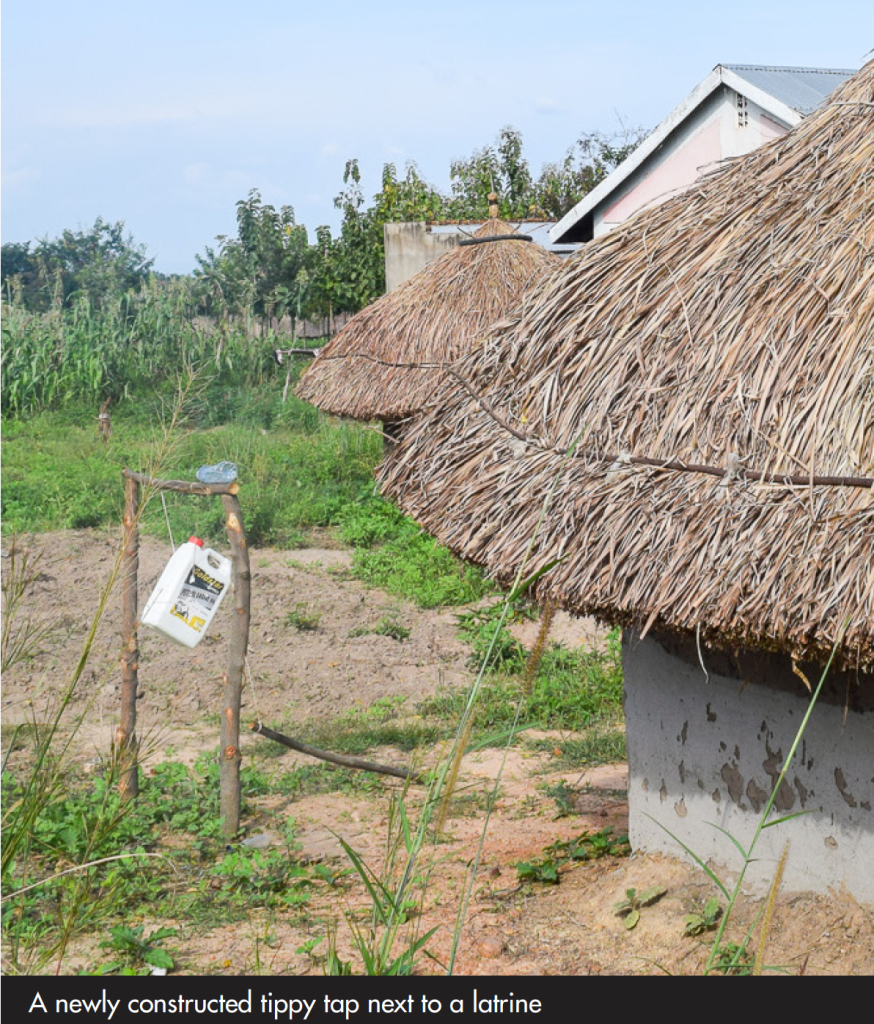
Gad using a tippy tap
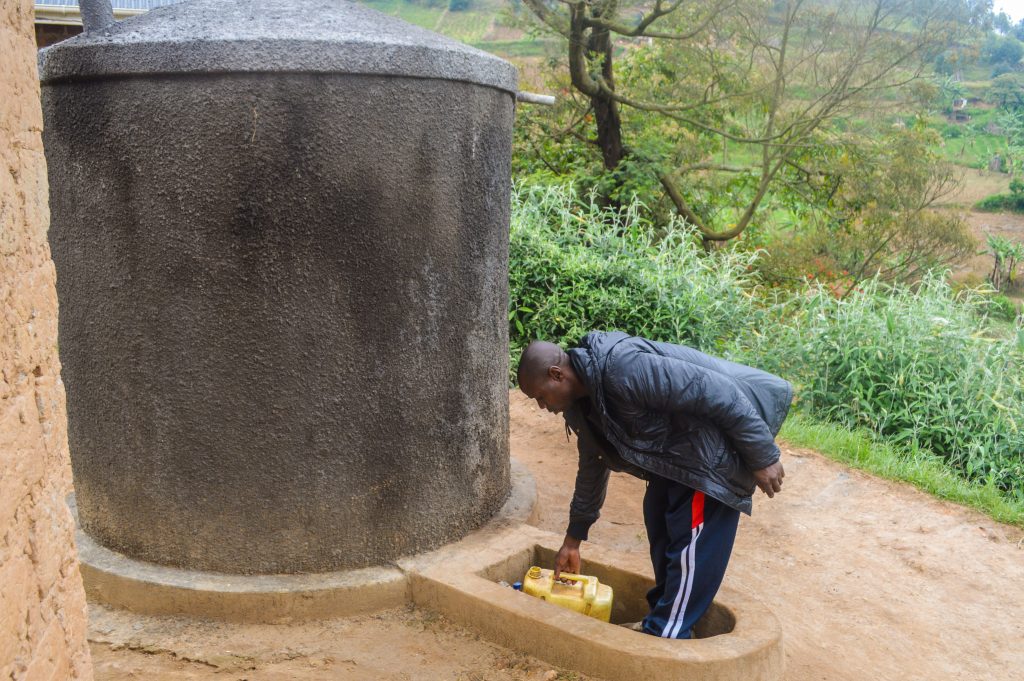
Gad fetching water from a rainwater harvesting tank
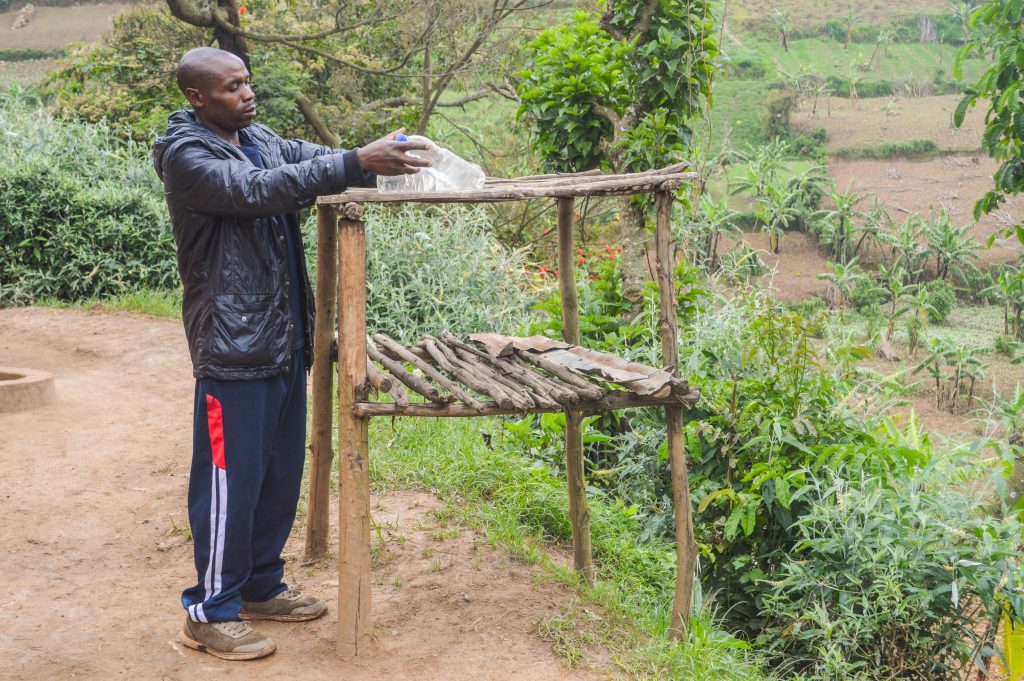
Gad placing SODIS bottles onto a rack
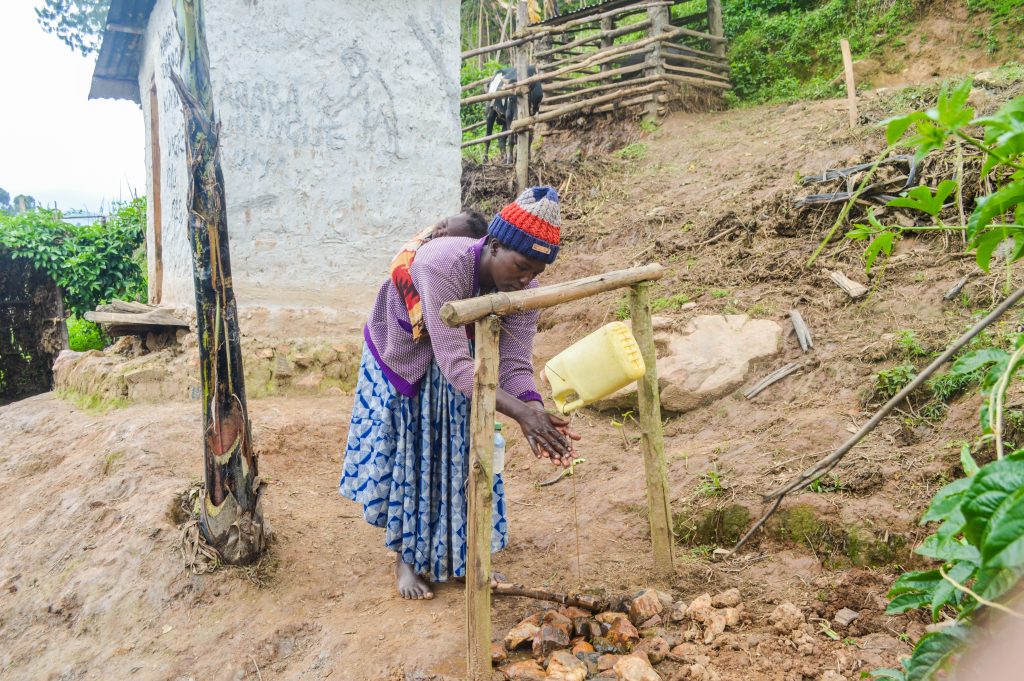
Gad's wife using a newly installed tippy tap
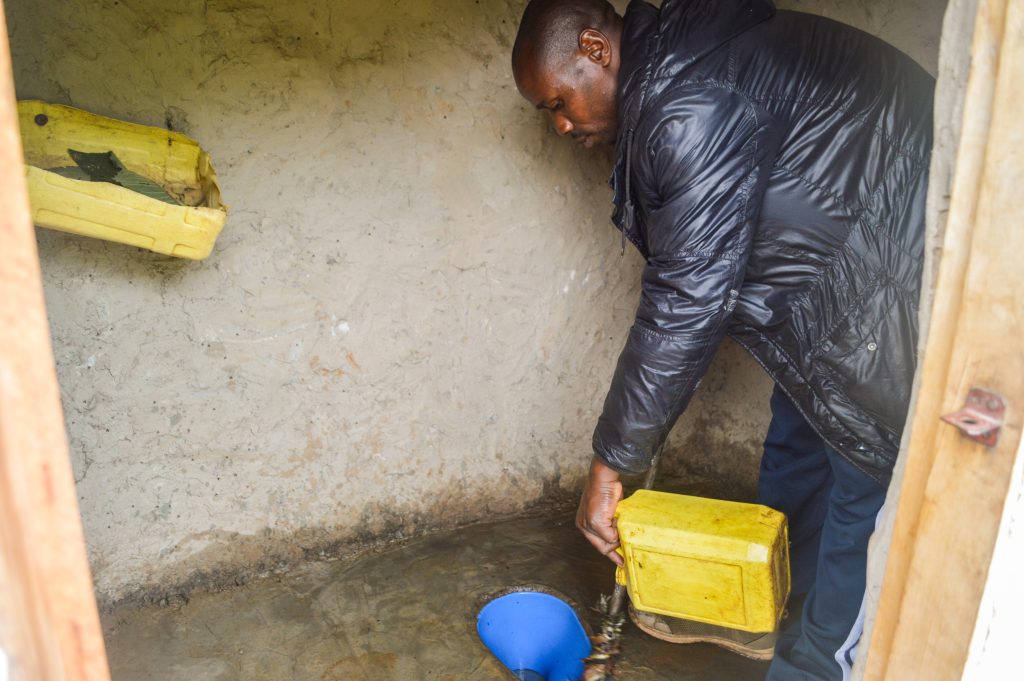
Gad cleaning his latrine

Iriri Village

Iriri village

In the heart of a small rural village of IRIRI in Bondo Parish, Anyiribu Sub County, Madi Okollo District, a remarkable transformation unfolded— driven by the collective efforts of the community and a dedicated health initiative program by Africa Water Solutions (AWS). This is the story of how improved sanitation and hygiene practices brought hope, health, and dignity to a once-struggling village.

The village lacked the knowledge, motivation, and social support to adopt safe sanitation and hygiene practices. OD situation was spiraled by rampant night discos at Anyiribu Trading centre, with disco dancers defecating along the main road. With a team of committed AWS food soldiers and community structures like VHTs, LCI Chairpersons,

A toilet in Iriri village

WASH Committees, Community Artisans and the AWS team focused on transforming attitudes and behaviors through triggering, rigorous public awareness, training and regular purposive monitoring to break the rigid cultural norms, misinformation, and low health literacy that had created resistance to change. Within 12 months last year, Iriri village experienced a dramatic shift: Open defecation was eliminated, with 93.8% (75/80×100) of households constructing / improving and using latrines with recommended facilities, Handwashing with soap became routine, especially after latrine use, reported cases of diarrhoea dropped by 65%, especially among children under five, Community pride soared, with Iriri village being declared ODF and recognised as a model village by Sub-county authorities and the Health Assistant reported increased participation of communities in development initiatives, enhanced ownership and sustainability of WASH facilities by the community.

This success story shows that lasting change doesn’t come from infrastructure alone—it comes from shifting mindsets, building trust, and empowering communities to take ownership of their health.

Japiemonen primary school

Japiemonen Primary School has become the admiration of many people within and around Pokwero Sub – County and Pakwach District, having been supported by Africa Water Solutions (AWS) through WASH Program. It’s strategic location by the roadside makes it clearly visible. The school is located in Japiemonen West Village, Pokwero Parish, Pokwero Sub-County and is among the 64 Government aided Primary Schools in Pakwach District.

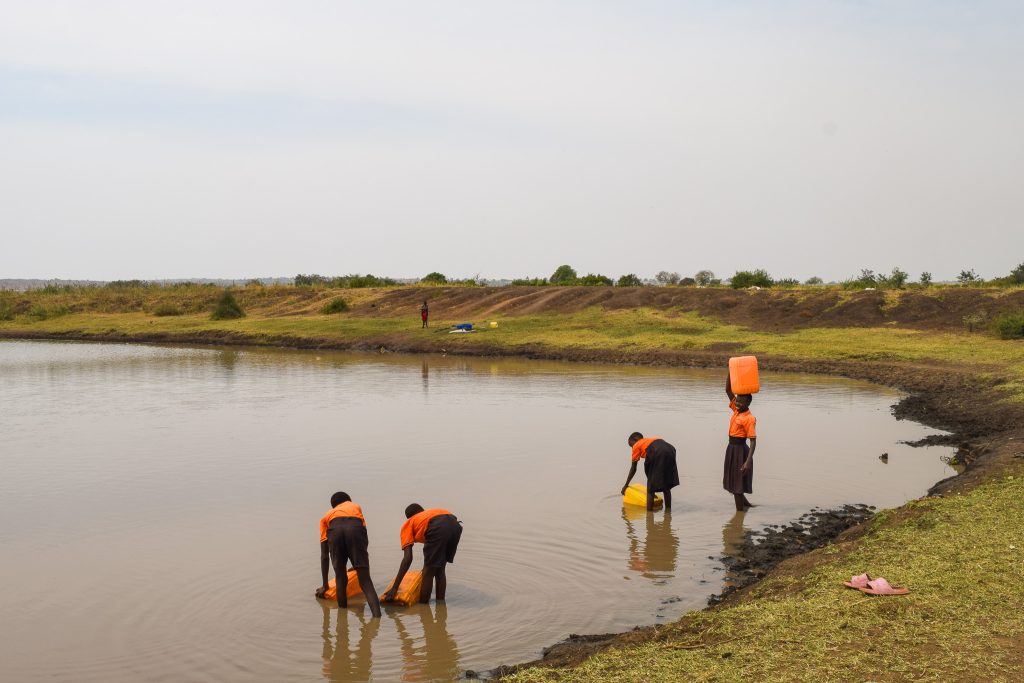
Students of Japiemonen fetching water from a pond

Pupils of Japiemonen collect water from a hand-dug pond in Odro Village

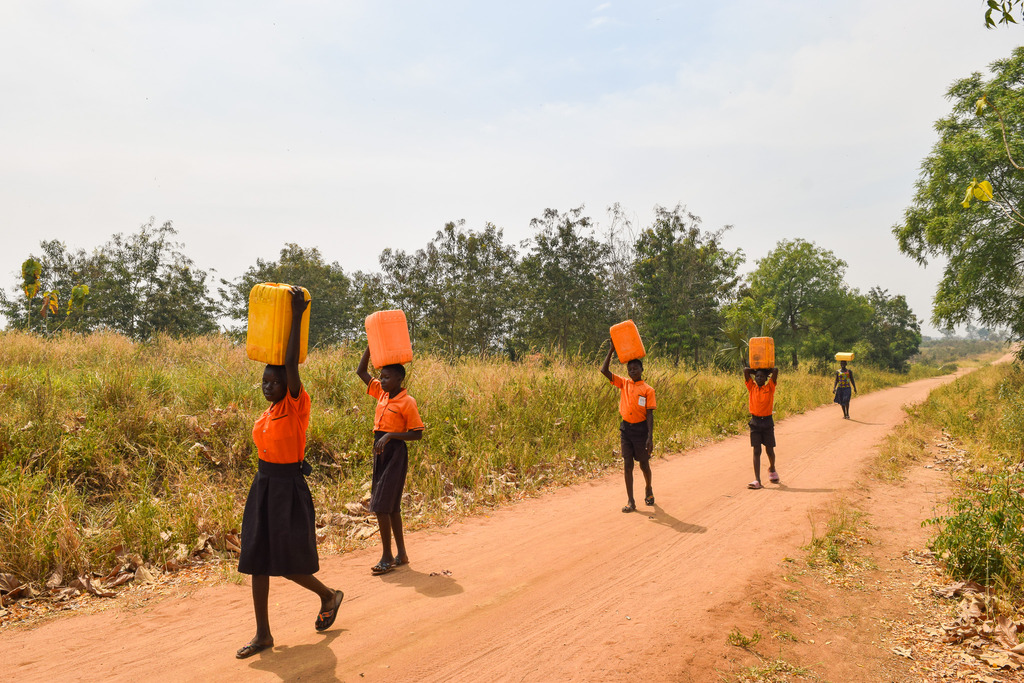
Previously, the school had no source of safe drinking water. Consequently, maintaining sanitation and hygiene for both learners and teachers was a nightmare. The learners trekked over 3km to collect water from the only available hand-dug pond in Odro Village, which was shared with animals. This made them miss lessons because of the distance and long hours taken to and from the school. On some days, they resorted to runoff water after a heavy downpour. Sometimes the school resorted to buying. This made the school expenditure increase by more than UGX 15,000 weekly, in addition to the boda-boda transport of UGX 5,000 cost per trip. The school management introduced a payment of UGX 500 per child to meet this cost, but this later failed because most parents could not afford it. Due to dehydration, some learners would leave school and go back home before the end of classes.

These situations resulted in frequent outbreaks of waterborne diseases among both the learners and teachers, especially diarrhoea, bilharzia, and intestinal worms, causing them to miss school for an average of 4-5 days every month.

More than Ugx. 20,000 weekly

This money includes Ugx. 5,000 spent on each trip to bring water to the school.

Japiemonen students carrying water jerrycans on their heads

Pupils from Japiemonen P/S on their long trek from the only water source (hand-dug pond), before AWS introduced a WASH program in the school

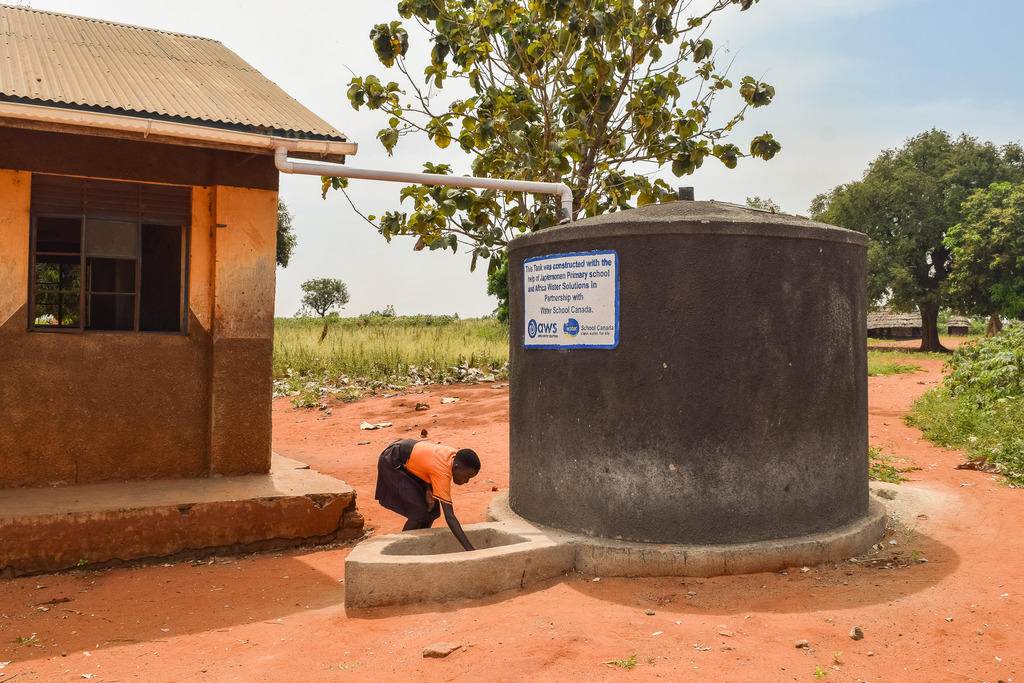
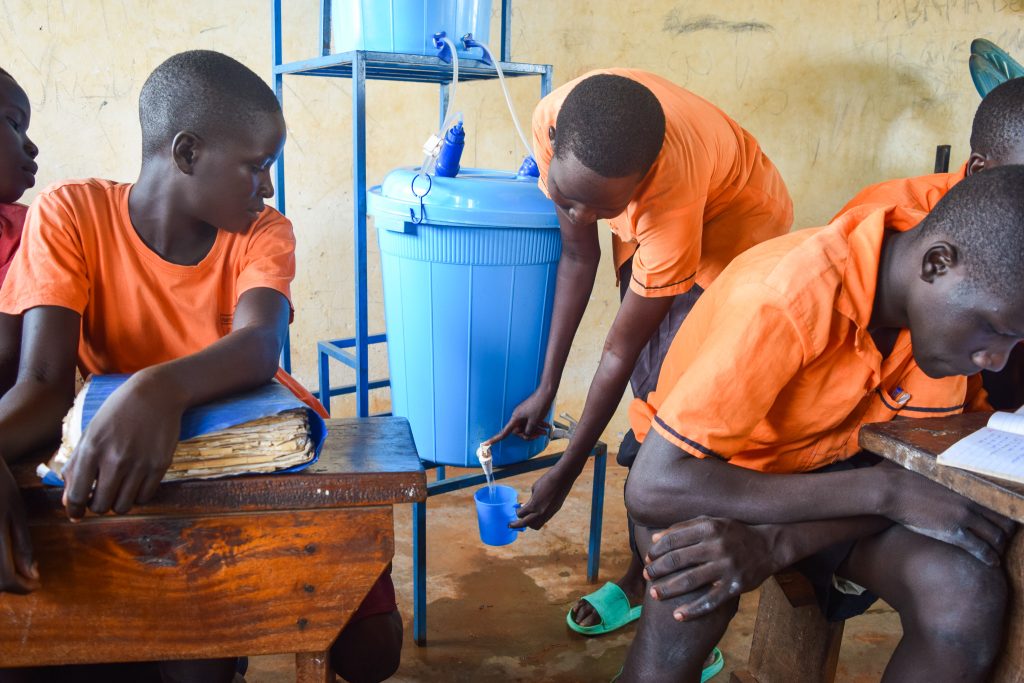
Today, the narrative is changing. Learners no longer drink unsafe water; AWS has provided 7 sets of water filters for each class. Both learners and teachers have been equipped with knowledge and skills of using the system. In addition, AWS has also improved access to safe and clean water by constructing 2 Rainwater Harvesting Tanks in the same school, with a capacity of 10,000 liters each.

A Japiemonen student fetches water from a rainwater harvesting tank
A student of Japiemonen primary school draws water from a SAWYER filter

Kibobe health centre II

Kikobe Health centre II

Kikobe HCII, located along the Kucwiny-Wadelai road, once struggled under the weight of water scarcity. Without clean and safe water, the risks were immense; pregnant women struggled to access Antenatal and postnatal services, as well as other healthcare services for their children, due to the long distance to the nearest Health Facility (approximately 12 km). As a result, most women resorted to home deliveries, either on their own or with the help of Traditional Birth Attendants who are ill-equipped, hence leading to a rise in cases of maternal and child mortality.

While to some, they considered it a punishment of some sort. Those who persisted often carried two jerricans of water weekly from Nebbi Town to Kikobe for their use, said the District Chairperson. These conditions made working at the facility a nightmare.

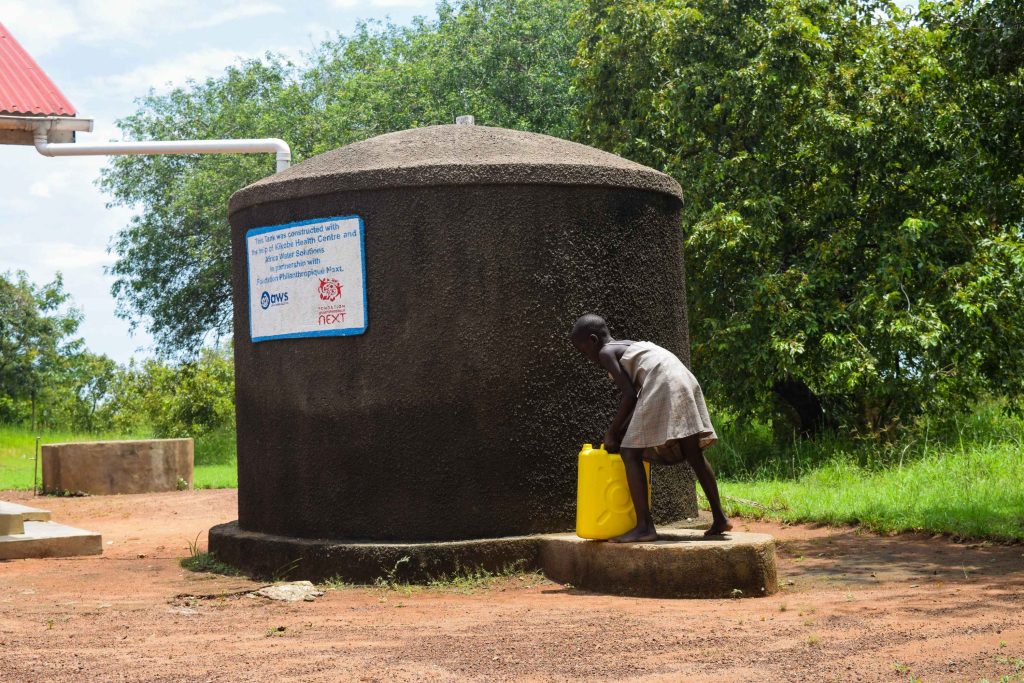
Rain water harvesting tank at Kikobe HC II

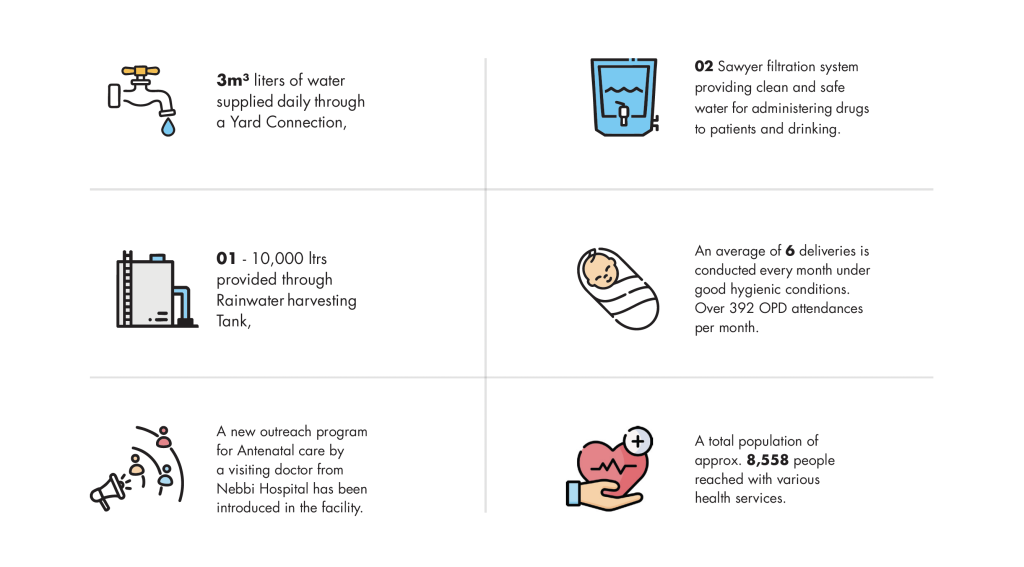
But in 2021, everything changed. With support from Africa Water Solutions (AWS), a sustainable water supply system was installed, ensuring a constant flow of water to the facility. Handwashing facilities were strategically placed for patients, and the fear of contracting infectious diseases was reduced among health workers, with many reporting feeling more confident and motivated as they can now perform their duties without fear of contamination. The overall quality of health care has improved; mothers delivering at the facility have expressed relief, knowing that their babies are born in a clean and safe environment.

Kikobe health centre II

This success story highlights how access to safe water is not just a basic need but a cornerstone of quality healthcare. By addressing this critical issue, AWS has not only improved health outcomes but also restored hope and dignity to a community in need.

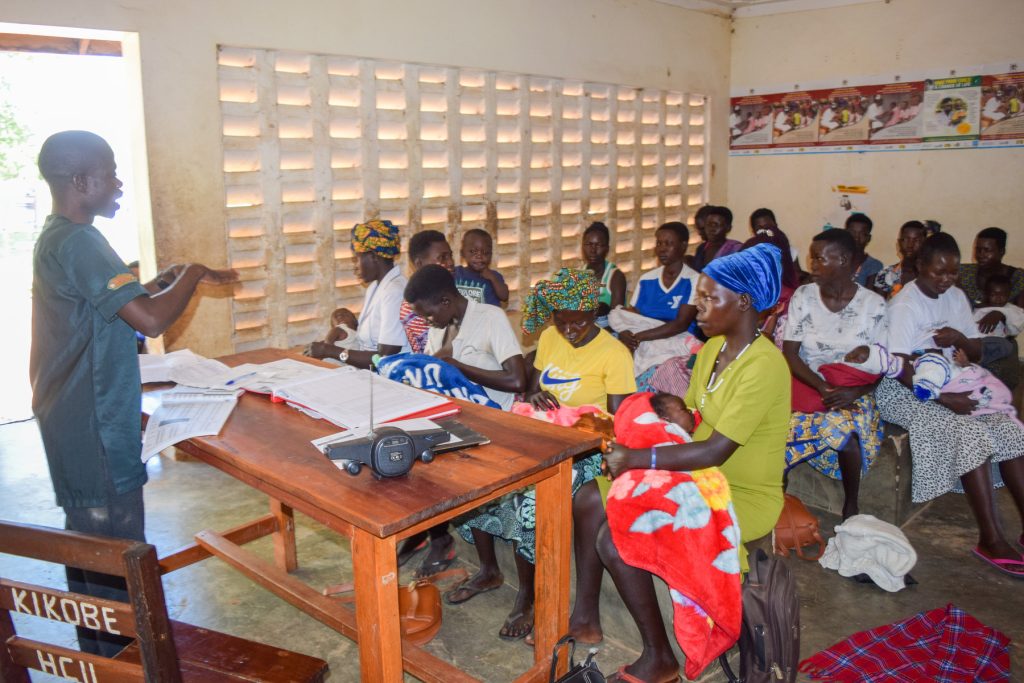
Patients listening to a nurse at Kikobe HC II