MARY’S JOURNEY OF HOPE THROUGH IGP SUPPORT

Life wasn’t easy for Tino Mary. After the collapse of her marriage, she sought refuge at her parents’ home, only to be driven away over bitter land conflicts with her brother. Forced into a small, rented room in a nearby trading center with her daughter, Anyango Mary struggled to stay afloat. Eventually, the weight of unpaid rent led to her eviction, leaving her dependent on the kindness of a well-wisher who was starting on the construction of a new home. He gave her a small space to construct a small grass thatched house behind the space where he was going to construct his house, on condition that she cooks for his workers. This is where she leaves to date.

In 2024, life started changing when Mary’s daughter, Anyango Cana, was enrolled in the Girl + program. This is how Mary was identified for an Income Generating Project (IGP), under the Girl+ economic empowerment programme, meant to improve household income. Mary was identified as a beneficiary, and she seized the opportunity to change her fate. With two goats valued at UGX 300,000 from Africa Water Solutions, she finally had a foundation to build on.

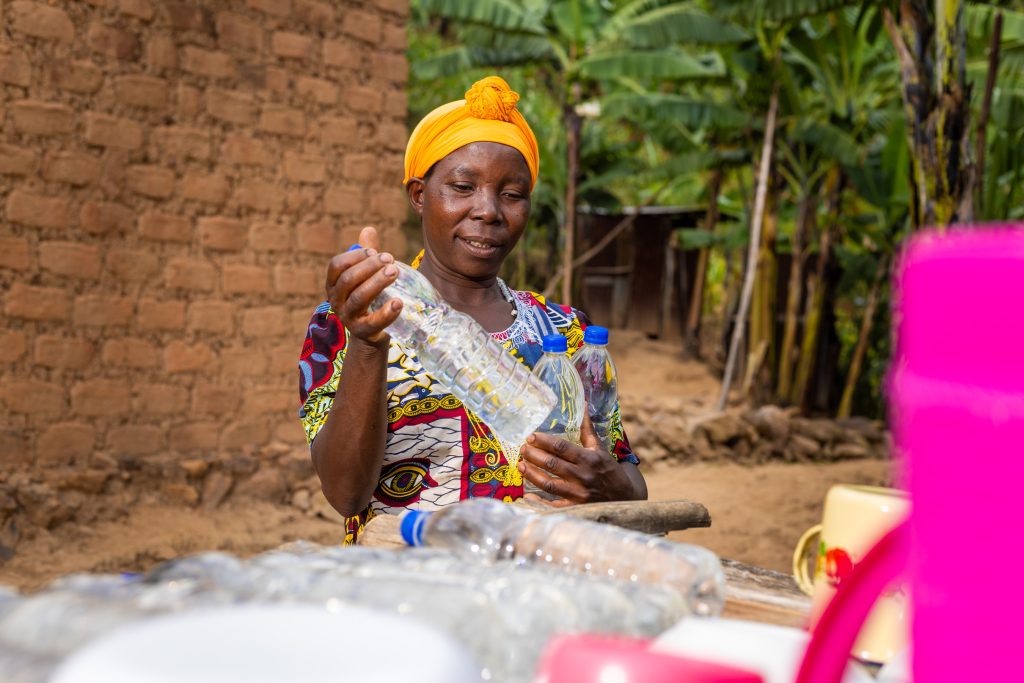
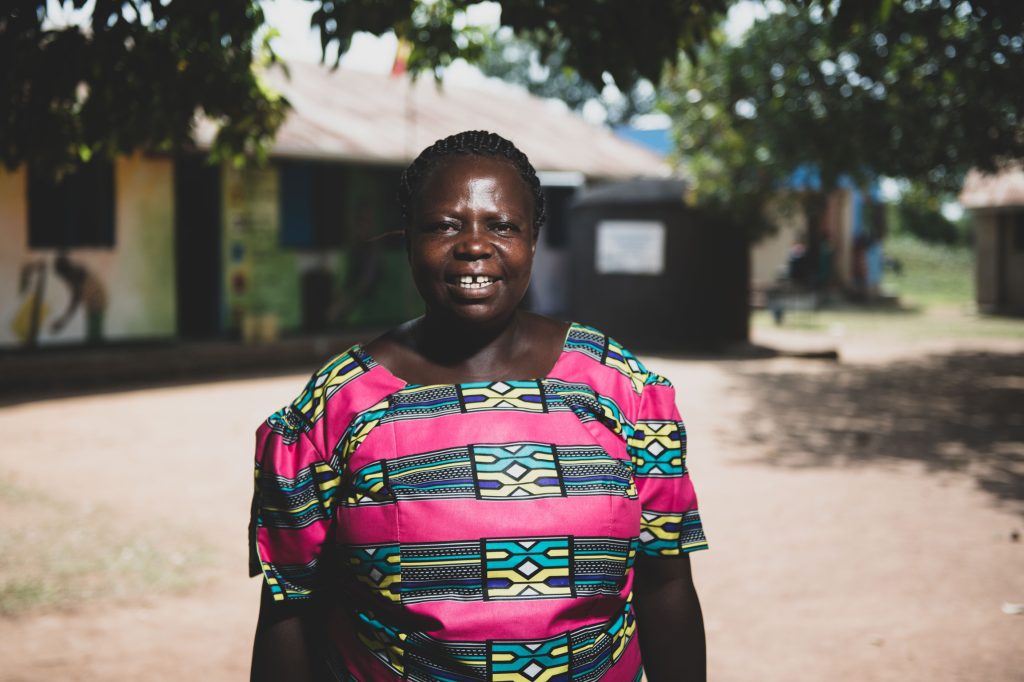
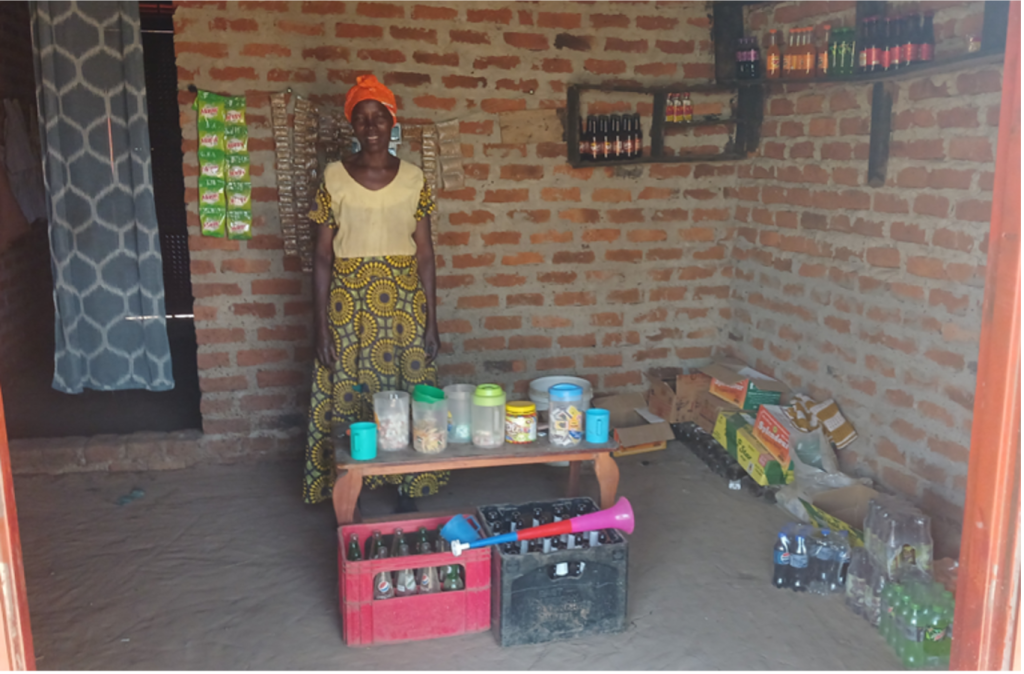
Mary stands infront of her shop items

Within four months, her doe gave birth, sparking a chain reaction of growth. She sold one of the goats for 250,000 shillings, more than double its initial value, and used the profit to diversify. She invested in rice growing, opened a small retail shop, and began paying down her loan.

Success followed her hard work. When the doe birthed a second kid, Mary sold the first kid for UGX 150,000. This money went straight back into her land, covering the costs of weeding her flourishing rice garden and paying off more UGX 100,000 to cover her loan balance.

Mary’s life has changed. She has a testimony concerning how Africa Water Solutions has transformed her life. She now provides consistent meals, covers the family’s medical bills, and saves UGX 12,000 every week through her savings group.

With her rice garden nearing harvest and her business thriving, Mary has her sights set on one goal: buying her own plot of land this year. She is no longer just looking for shelter; she is planning to build a permanent home for herself and her daughter, ensuring that Anyango Cana never has to face the instability her mother once did.

Gad Niringiyimana

Gad's story

Gad Niringiyimana is a husband, a father of four and a resident of Gisasa Village in Kisoro District. Today, he is known as a sanitation leader in his community. But not long ago, his own home told a very different story.

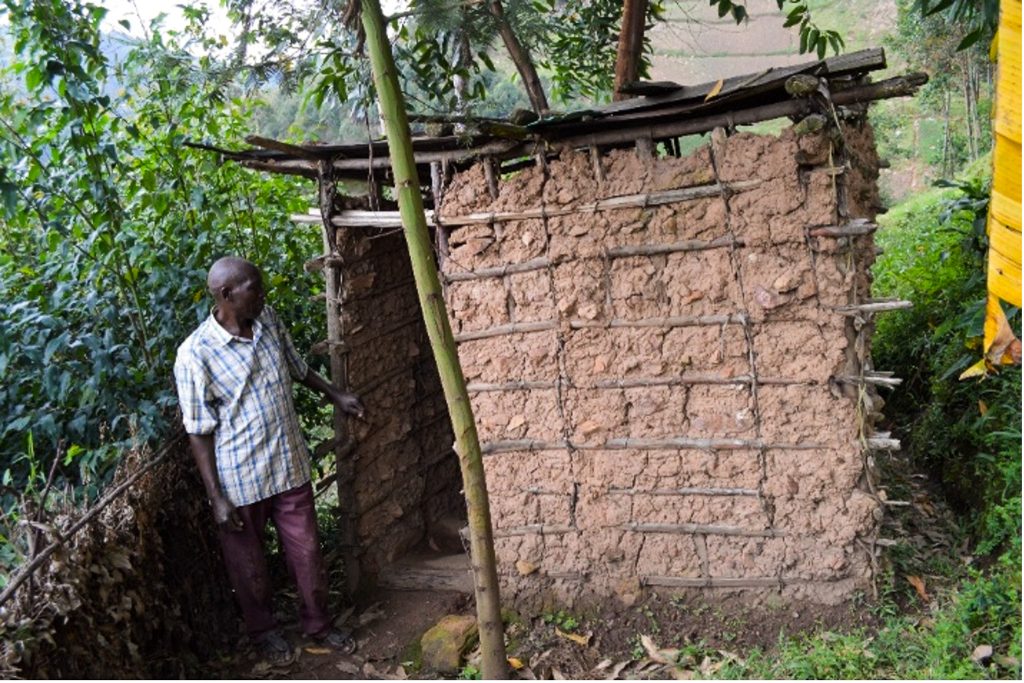
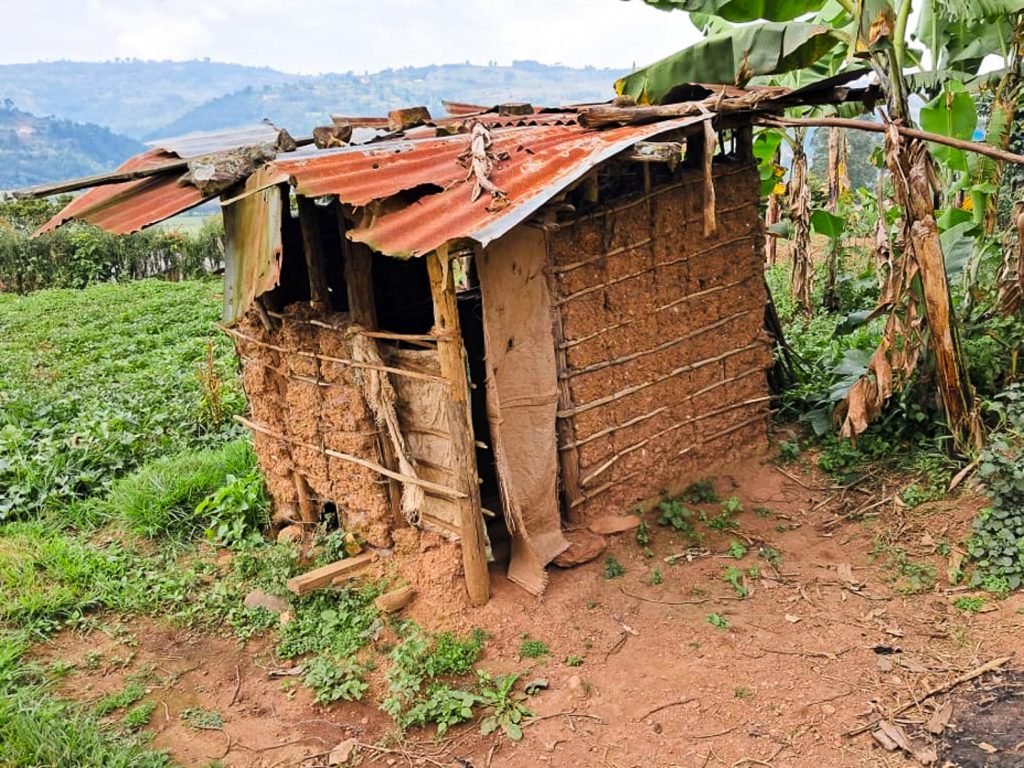
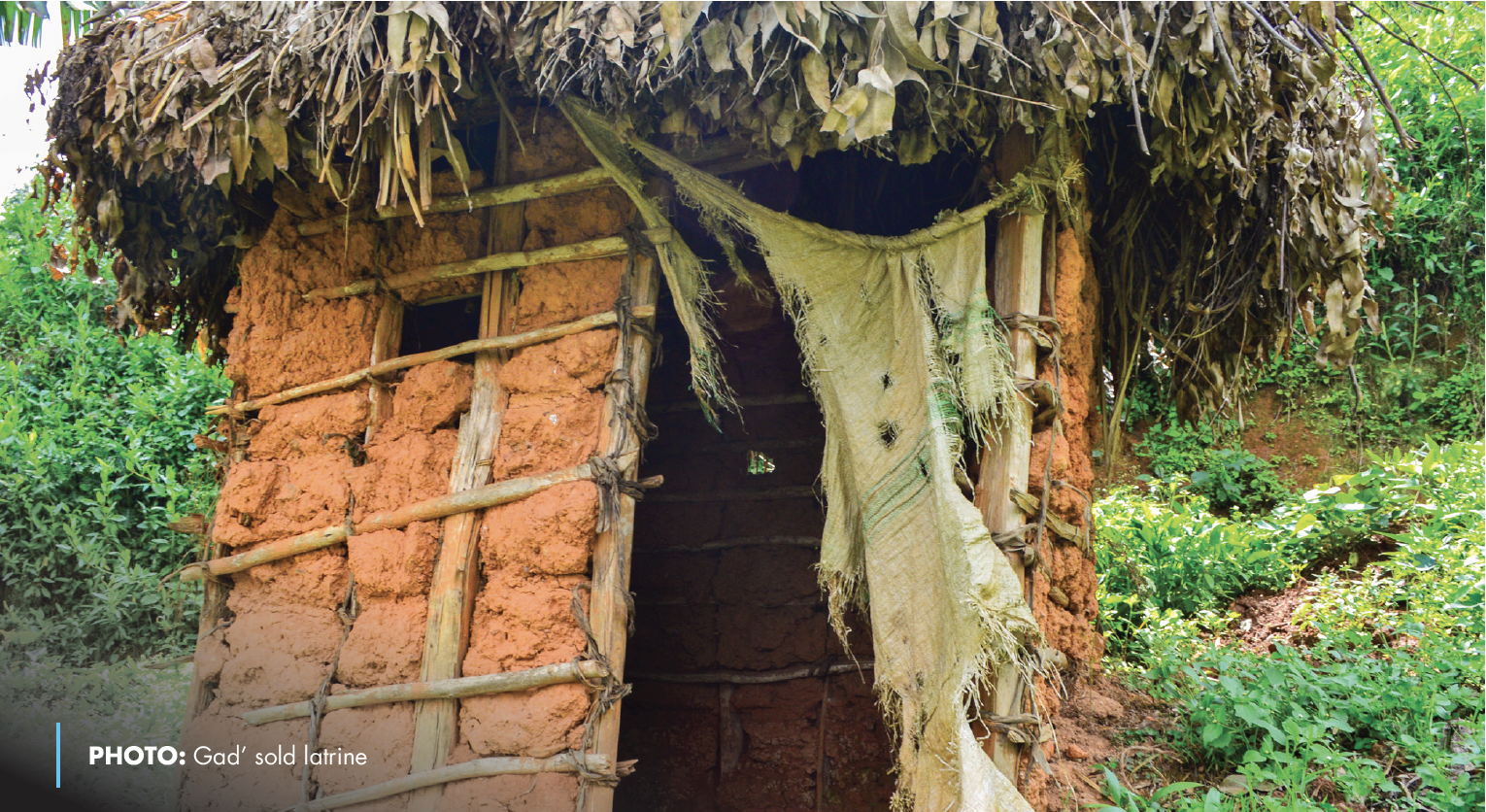
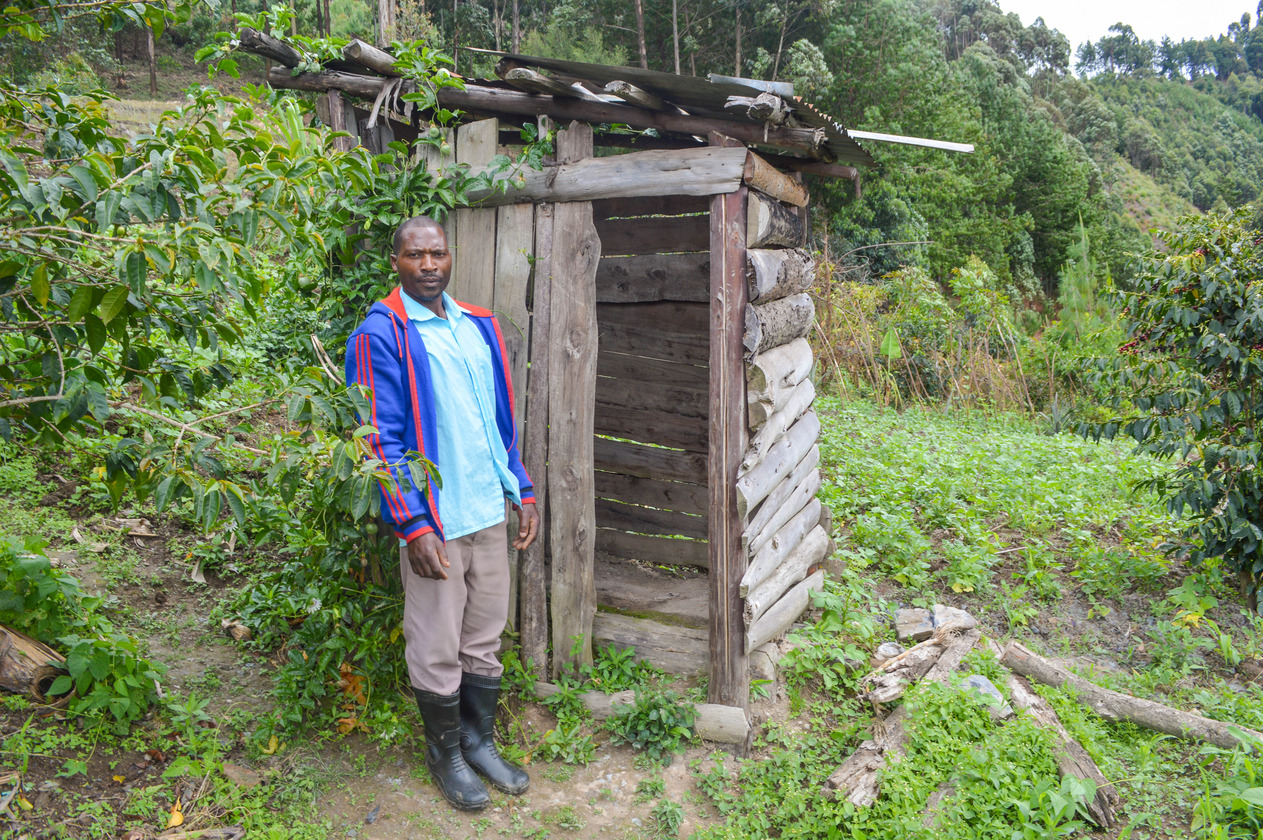
Before Africa Water Solutions began working in his village, Gad’s family used a grass-thatched pit latrine that was poorly built and unsafe. The walls and floor had holes, and it was hard to tell where one was even meant to squat. The household had no bath shelter, no dish rack and no basic facilities to support good hygiene. Like many families, Gad worked hard every day, but sanitation was not something he had given much thought to, simply because he did not know better.


Everything changed during a community sanitation meeting. As people openly discussed the health risks of poor sanitation, Gad felt deeply ashamed. He remembers wanting to leave the meeting, but instead, he made a quiet promise to himself – his family would never live like this again.


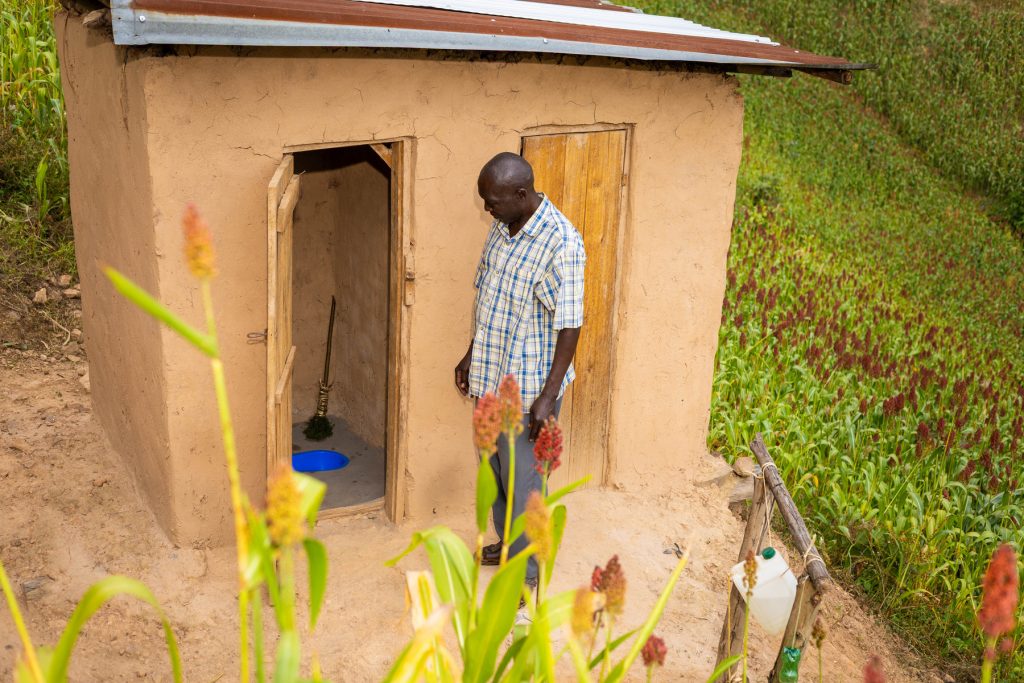
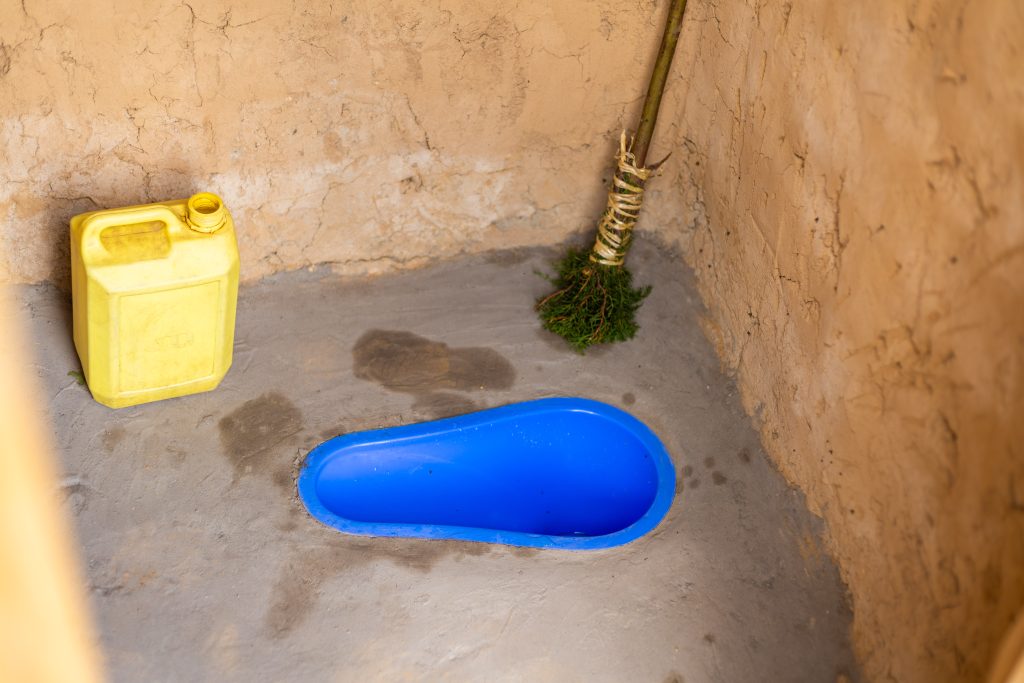
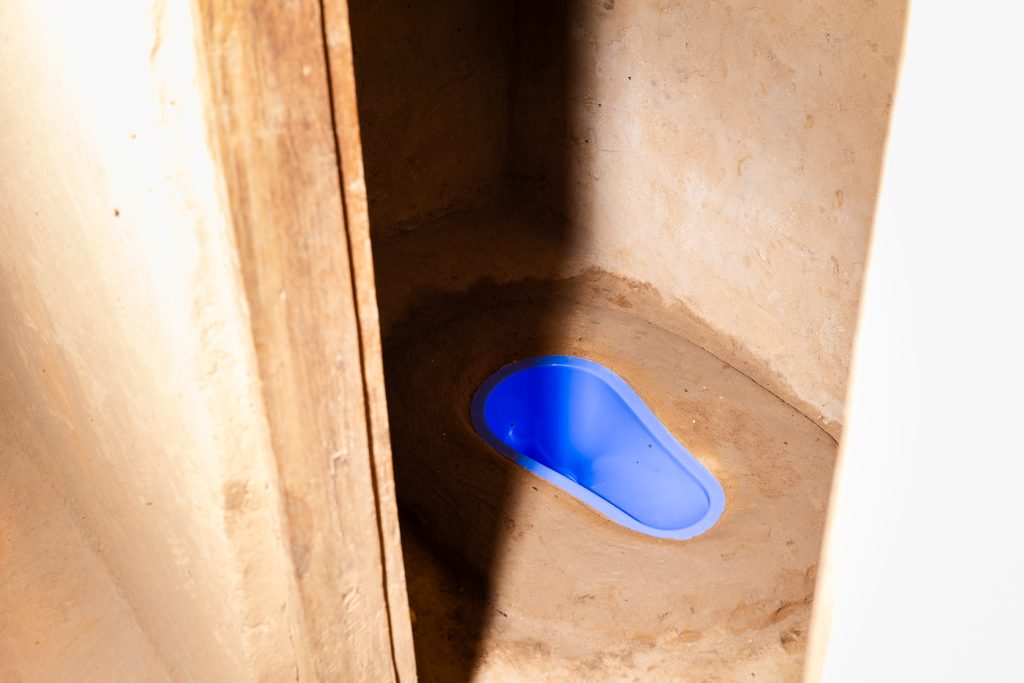
After, Gad was chosen by his neighbours to serve as Chairperson of the Village WASH Committee. The trust placed in him pushed him to act. He went home and immediately began digging a new pit latrine. This time, he took care to build it properly; neatly mudded, well finished, fitted with a satopan and safely shuttered. He also built a

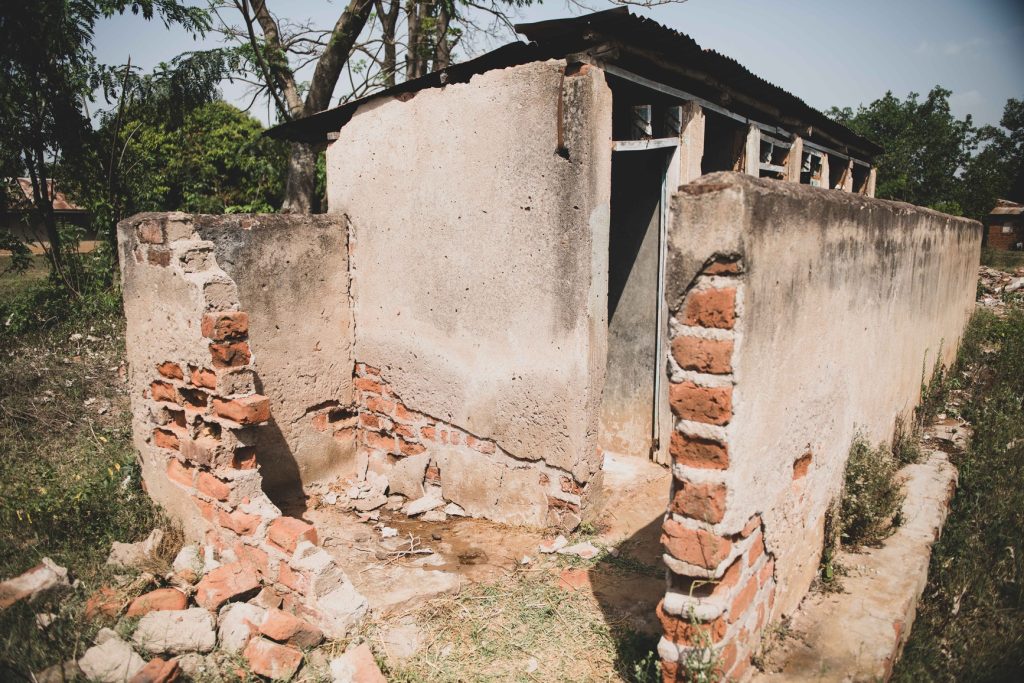
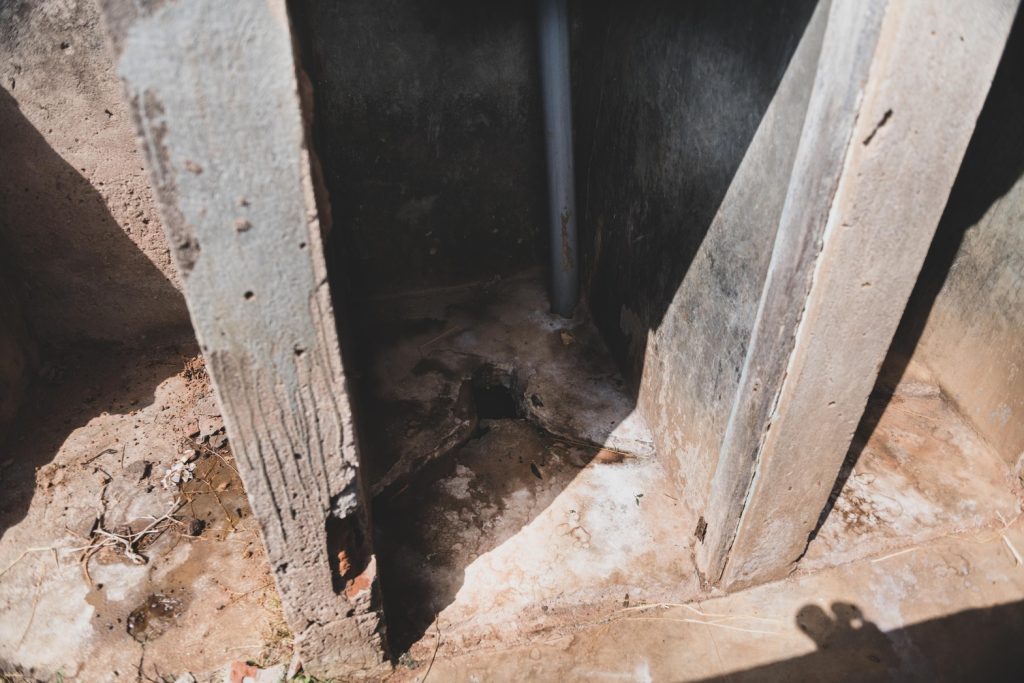
Gad's old latrine

bath shelter for the first time. His home quickly became an example that others could see and learn from.

Gad did not keep this change to himself. With support from the AWS team, he trained his wife and children in good sanitation and hygiene practices, ensuring the improvements at home would last. He then reached out to his neighbours, working closely with other WASH committee members and AWS staff to encourage households to improve their habits and facilities.

By leading through example, rather than words alone, Gad helped his village move forward together. Over time, Gisasa Village achieved Open Defecation Free status, a moment of pride for the entire community.

When asked what this journey meant to him, Gad said, “If Africa Water Solutions had not come, I would still be in darkness. Now grace has covered me, and my eyes are open. Kahangare AWS! (meaning Long live Africa Water Solutions).”

Today, Gad is not just a WASH chairperson; he is a role model. His story shows how knowledge, encouragement, and community leadership can turn shame into confidence, and simple actions into lasting change. Through people like Gad, Africa Water Solutions continues to support families and villages to live healthier, more dignified lives.

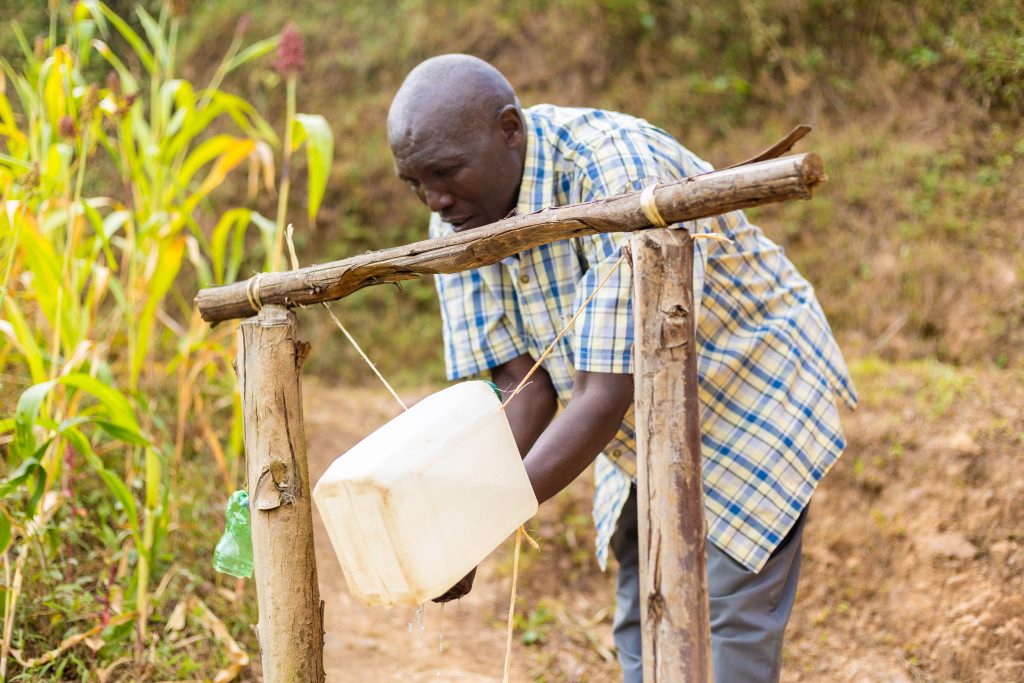
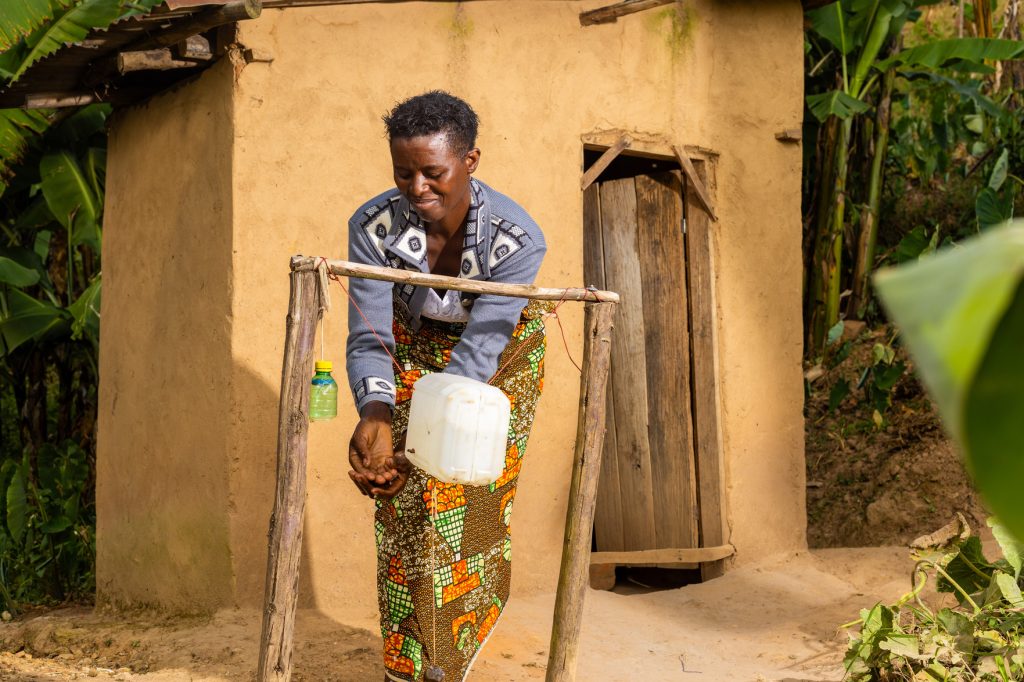
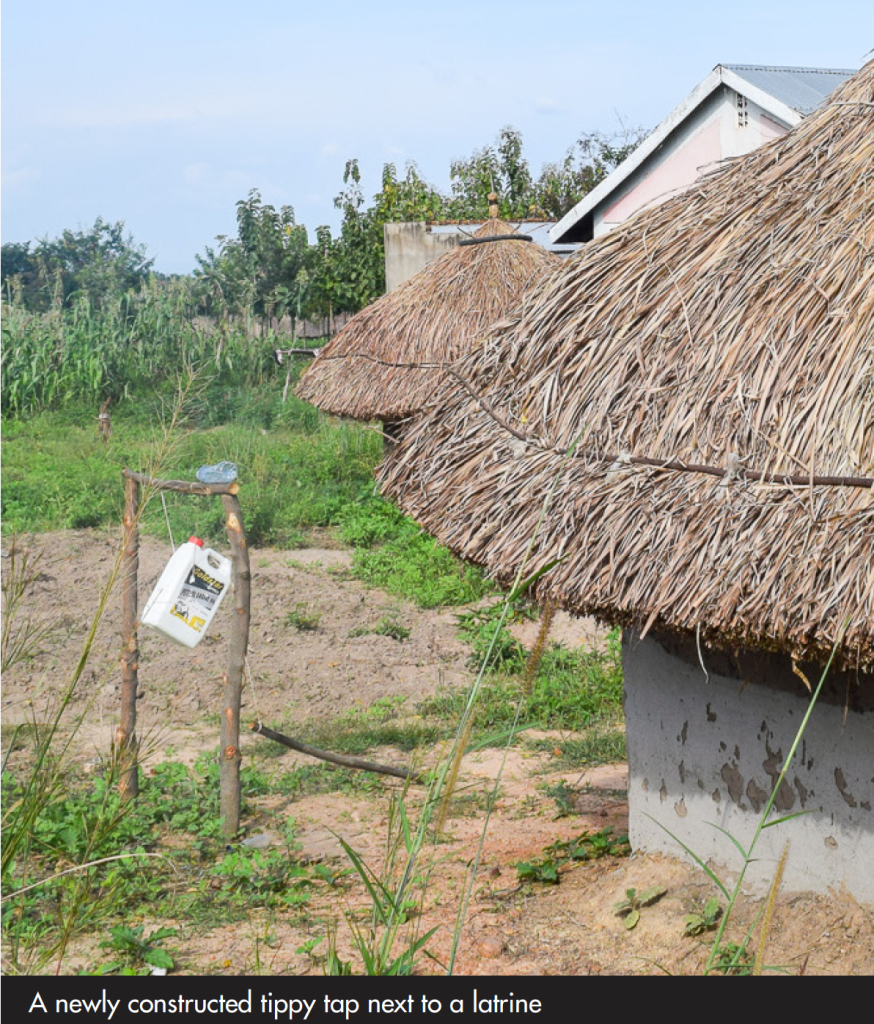
Gad using a tippy tap
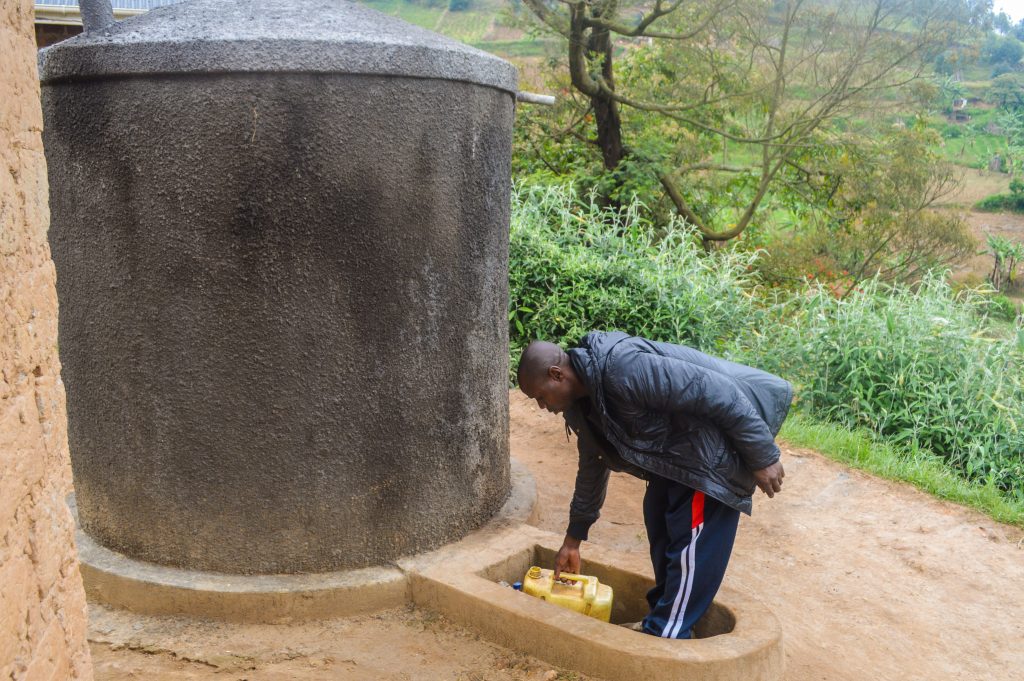
Gad fetching water from a rainwater harvesting tank
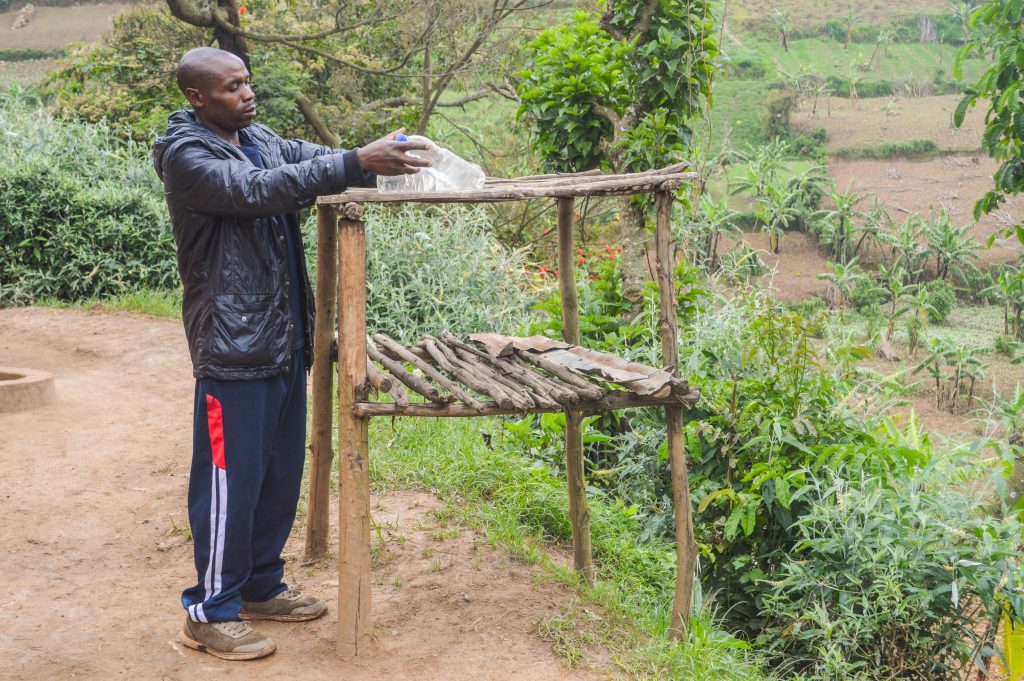
Gad placing SODIS bottles onto a rack
Gad's wife using a newly installed tippy tap
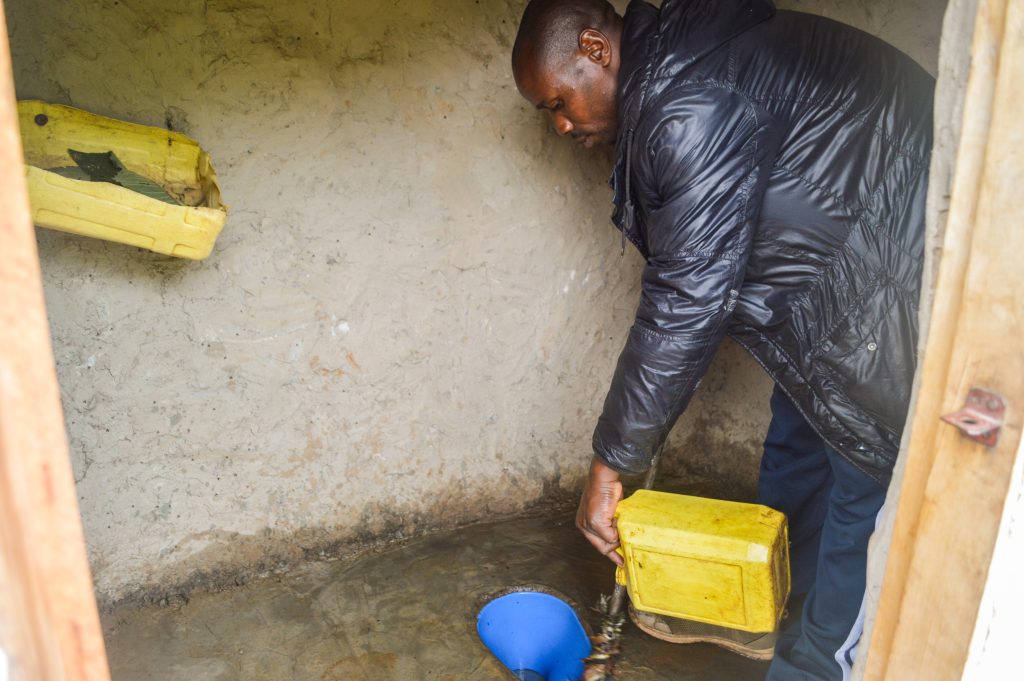
Gad cleaning his latrine

Iriri Village

Iriri village

In the heart of a small rural village of IRIRI in Bondo Parish, Anyiribu Sub County, Madi Okollo District, a remarkable transformation unfolded— driven by the collective efforts of the community and a dedicated health initiative program by Africa Water Solutions (AWS). This is the story of how improved sanitation and hygiene practices brought hope, health, and dignity to a once-struggling village.

The village lacked the knowledge, motivation, and social support to adopt safe sanitation and hygiene practices. OD situation was spiraled by rampant night discos at Anyiribu Trading centre, with disco dancers defecating along the main road. With a team of committed AWS food soldiers and community structures like VHTs, LCI Chairpersons,

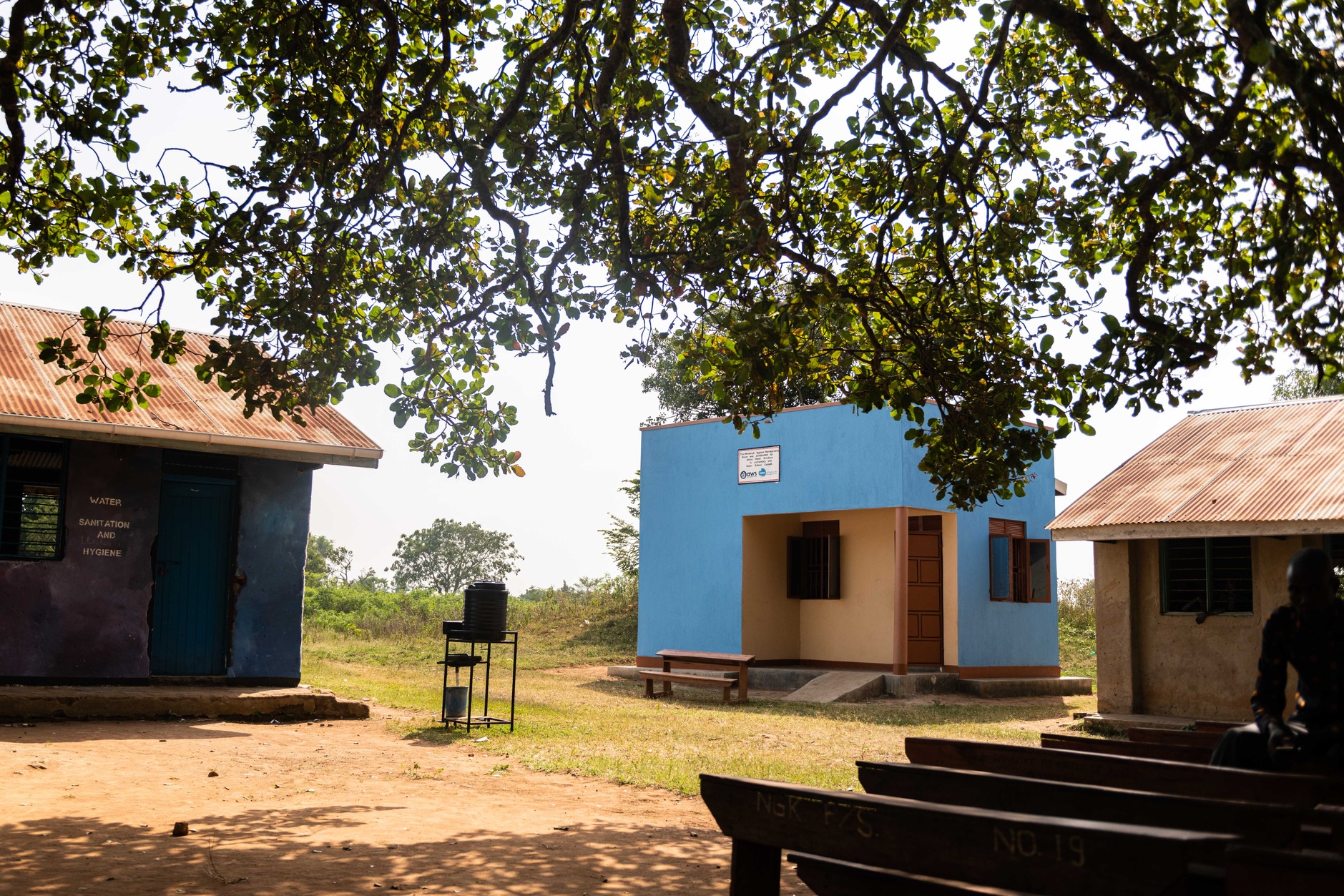
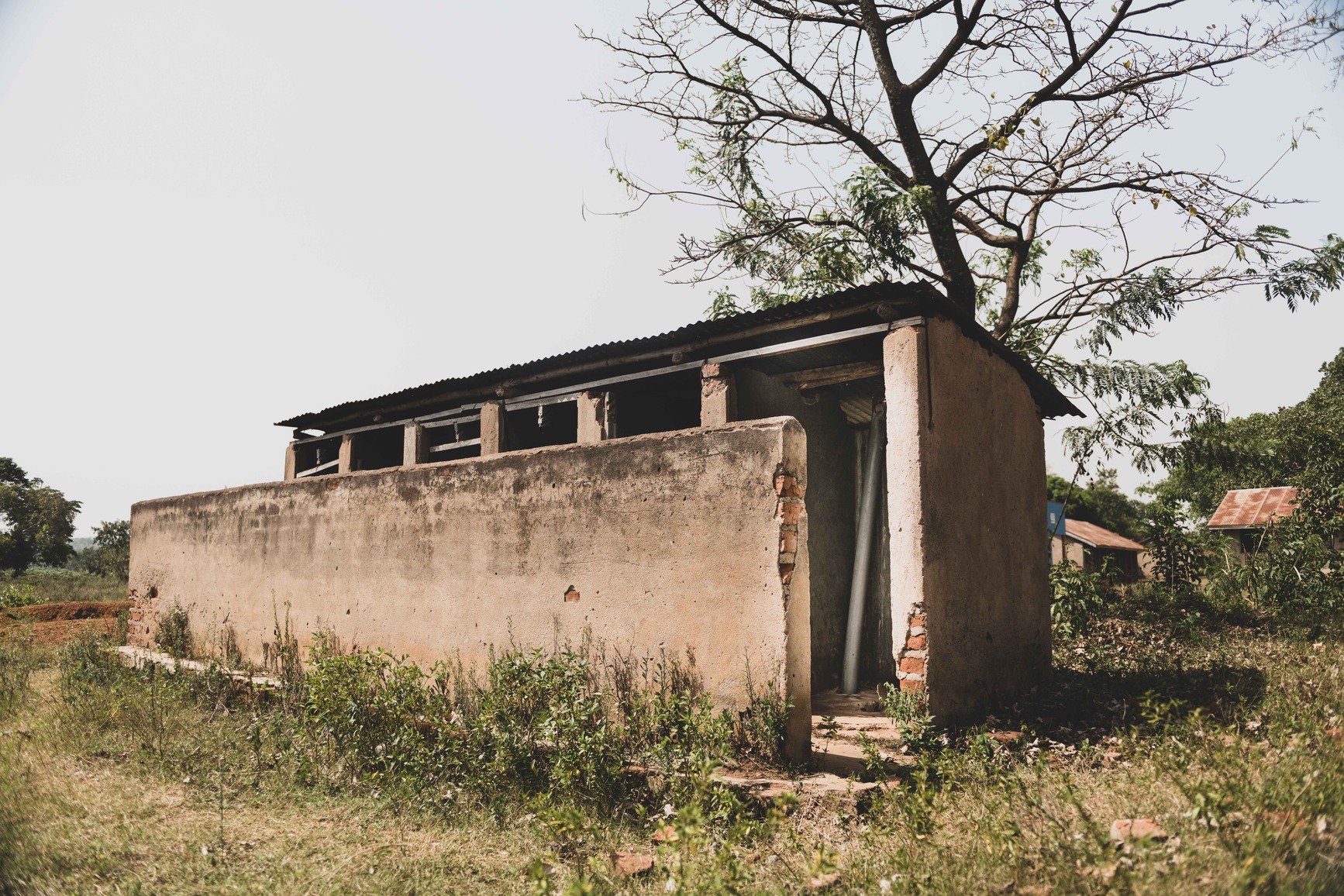
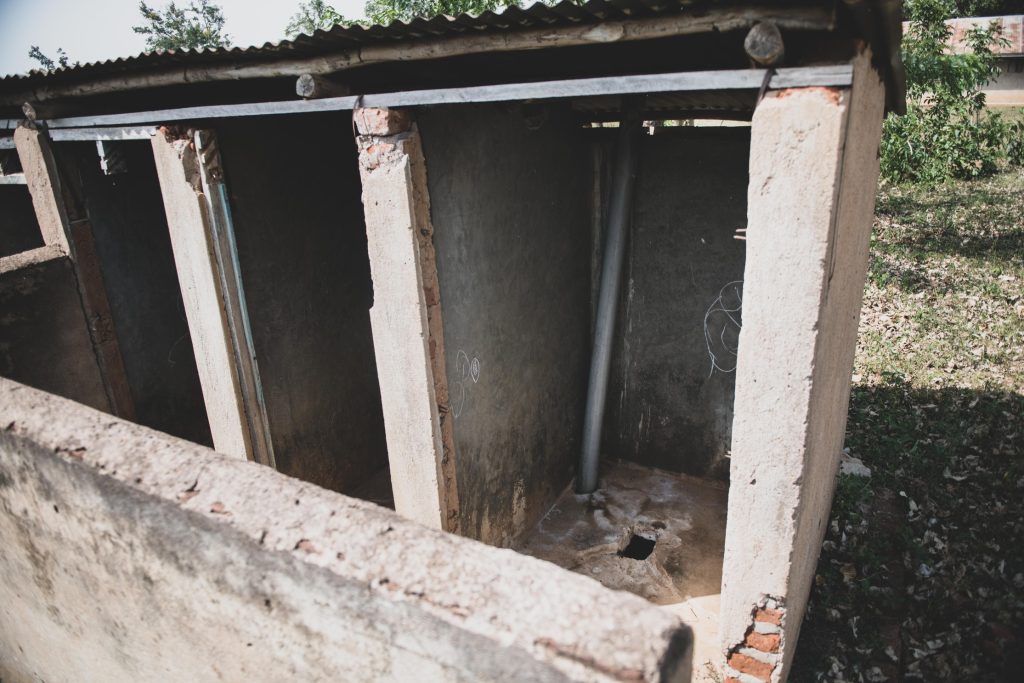
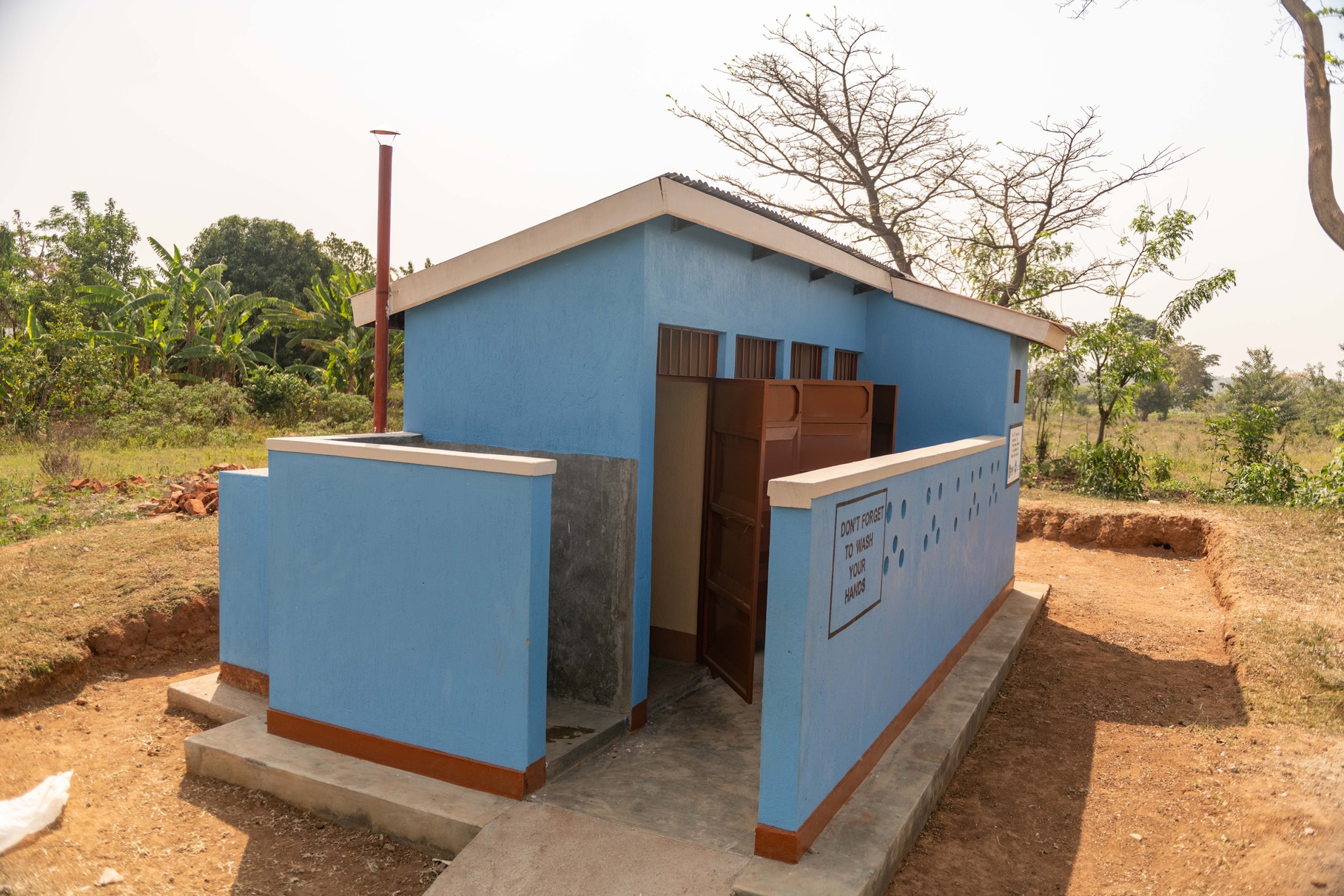
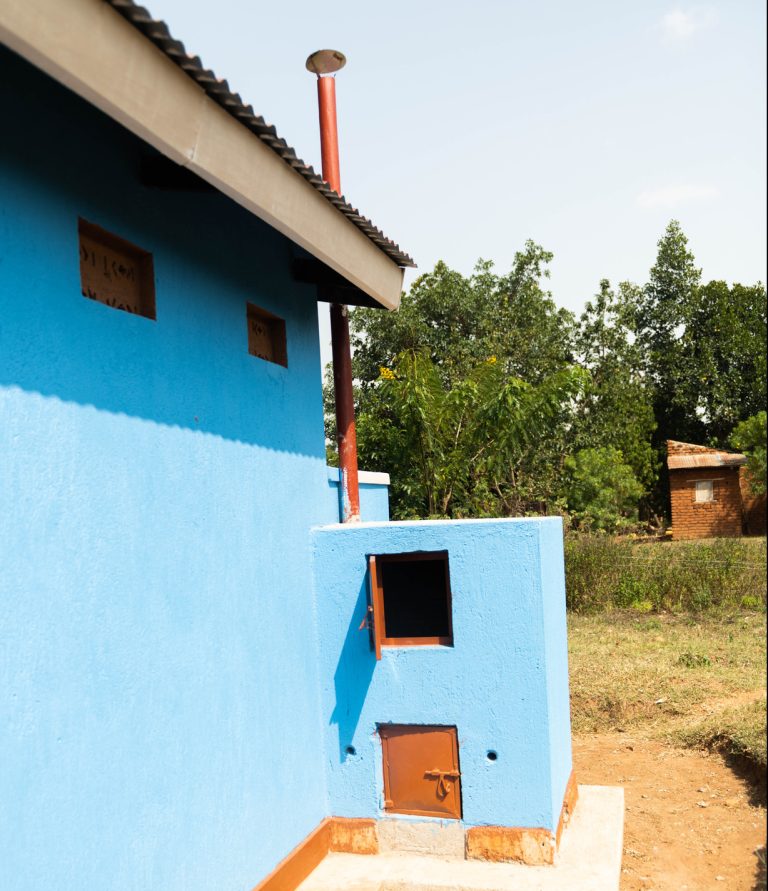
A toilet in Iriri village

WASH Committees, Community Artisans and the AWS team focused on transforming attitudes and behaviors through triggering, rigorous public awareness, training and regular purposive monitoring to break the rigid cultural norms, misinformation, and low health literacy that had created resistance to change. Within 12 months last year, Iriri village experienced a dramatic shift: Open defecation was eliminated, with 93.8% (75/80×100) of households constructing / improving and using latrines with recommended facilities, Handwashing with soap became routine, especially after latrine use, reported cases of diarrhoea dropped by 65%, especially among children under five, Community pride soared, with Iriri village being declared ODF and recognised as a model village by Sub-county authorities and the Health Assistant reported increased participation of communities in development initiatives, enhanced ownership and sustainability of WASH facilities by the community.

This success story shows that lasting change doesn’t come from infrastructure alone—it comes from shifting mindsets, building trust, and empowering communities to take ownership of their health.

Japiemonen primary school

Japiemonen Primary School has become the admiration of many people within and around Pokwero Sub – County and Pakwach District, having been supported by Africa Water Solutions (AWS) through WASH Program. It’s strategic location by the roadside makes it clearly visible. The school is located in Japiemonen West Village, Pokwero Parish, Pokwero Sub-County and is among the 64 Government aided Primary Schools in Pakwach District.

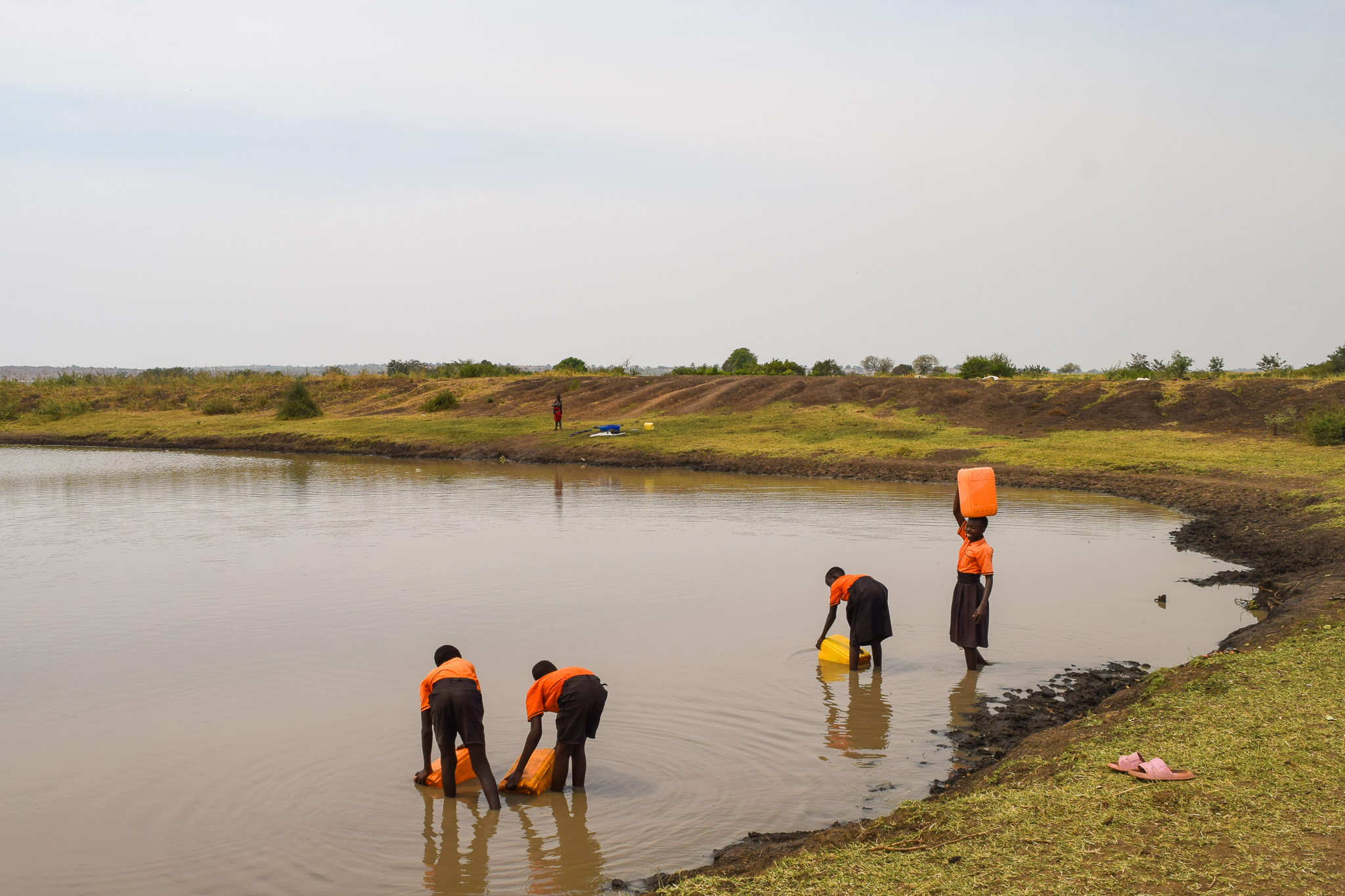
Students of Japiemonen fetching water from a pond

Pupils of Japiemonen collect water from a hand-dug pond in Odro Village

Previously, the school had no source of safe drinking water. Consequently, maintaining sanitation and hygiene for both learners and teachers was a nightmare. The learners trekked over 3km to collect water from the only available hand-dug pond in Odro Village, which was shared with animals. This made them miss lessons because of the distance and long hours taken to and from the school. On some days, they resorted to runoff water after a heavy downpour. Sometimes the school resorted to buying. This made the school expenditure increase by more than UGX 15,000 weekly, in addition to the boda-boda transport of UGX 5,000 cost per trip. The school management introduced a payment of UGX 500 per child to meet this cost, but this later failed because most parents could not afford it. Due to dehydration, some learners would leave school and go back home before the end of classes.

These situations resulted in frequent outbreaks of waterborne diseases among both the learners and teachers, especially diarrhoea, bilharzia, and intestinal worms, causing them to miss school for an average of 4-5 days every month.

More than Ugx. 20,000 weekly

This money includes Ugx. 5,000 spent on each trip to bring water to the school.

Japiemonen students carrying water jerrycans on their heads

Pupils from Japiemonen P/S on their long trek from the only water source (hand-dug pond), before AWS introduced a WASH program in the school

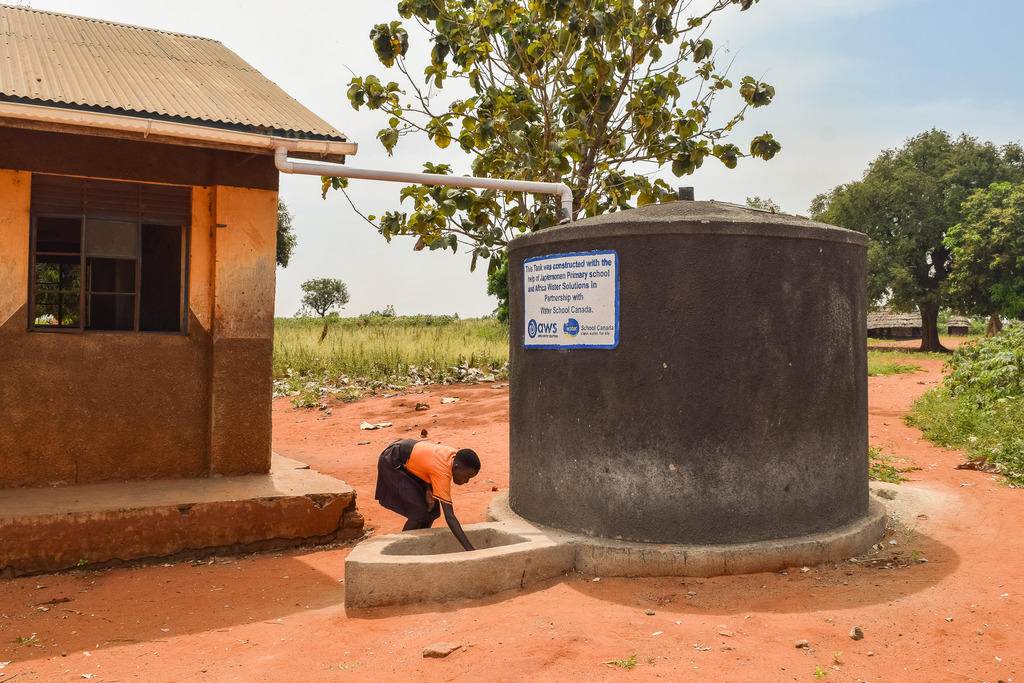
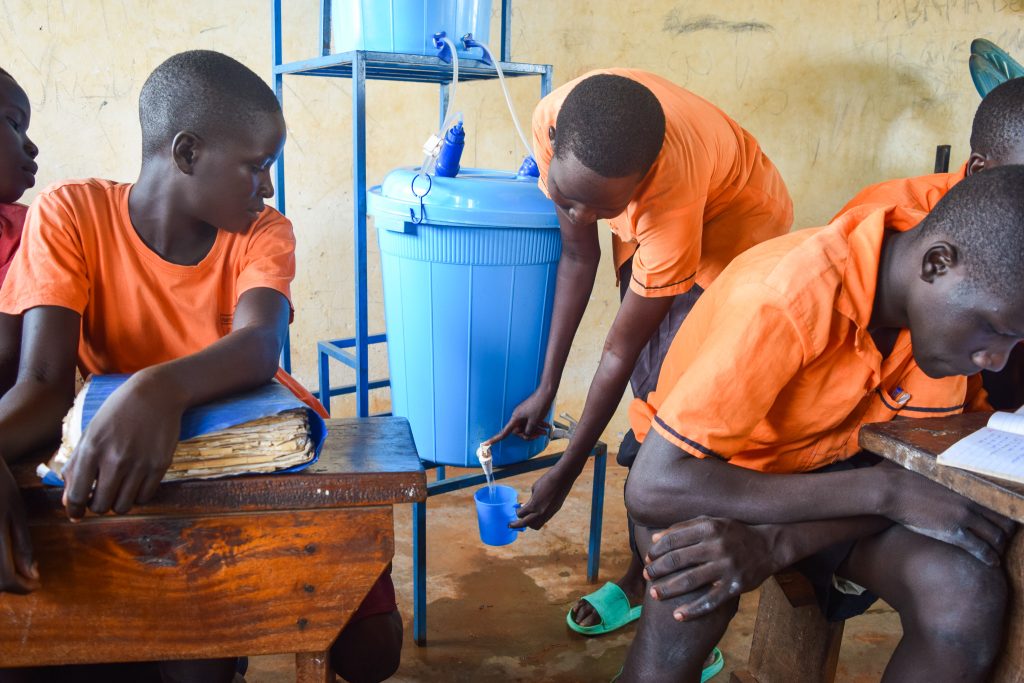
Today, the narrative is changing. Learners no longer drink unsafe water; AWS has provided 7 sets of water filters for each class. Both learners and teachers have been equipped with knowledge and skills of using the system. In addition, AWS has also improved access to safe and clean water by constructing 2 Rainwater Harvesting Tanks in the same school, with a capacity of 10,000 liters each.

A Japiemonen student fetches water from a rainwater harvesting tank
A student of Japiemonen primary school draws water from a SAWYER filter

Justus and Midius Begumanya’s household

Justus and Midius' story

In the heart of Katagiramizi village a name that means “dry village”lives Begumanya Justus, a 43-year-old father of five, and his wife Kyampiere Midius, aged 39. For years, life in their home followed a familiar pattern. Each day began with fetching water from a swamp 3km away and ended in a house where poor sanitation was an everyday struggle. Their old, crumbling latrine with no door, no privacy; just a ramshackle. Their children often fell sick with diarrhea and stomach infections, and most of their meagre income went towards buying medicine instead of food or school fees. With time, they got familiar with this situation, to the extent that it simply became part of the family’s “normal” life.

Everything changed when Africa Water Solutions came to their village, to implement a sanitation and hygiene improvement program. Justus and Midius attended a triggering session which opened their eyes. For the first time, they realized that poor sanitation was not only uncomfortable, but it was also dangerous and undignified. They felt ashamed but also determined to change.

When the community formed a sanitation committee, residents suggested that men from households with poor sanitation should join so that they could lead by example. Justus was one of them. Humbled yet inspired, he vowed to transform his home and prove that change was possible.

The very next day, Justus began working. He dug a new pit, built stronger walls and roofed his latrine. He even crafted a tight-fitting squat hole cover from stone, an idea that amazed his neighbours. When AWS visited a month later, they found a completely transformed home which was clean, organized and the members were full of happiness. Later, he replaced the stone cover with a sato pan, further improving hygiene.

Julius stands infront of his old latrine

Midius stands nexts to their new bathroom

Midius stands at the entrance to their new bathroom

Together, Justus and Midius began encouraging their neighbours to improve their own facilities. Soon, people from across Katagiramizi came to learn from them. Their home, once known for poor sanitation, became a model household for WASH improvement in the village and the surrounding. With improved health, the couple turned their attention to livelihoods. Justus started rabbit rearing, piggery and goat keeping, and their savings grew.

Recently, AWS recognized his efforts with a 6,000 litre rainwater harvesting tank, which he generously shares with his neighbours. Standing proudly in front of his clean, beautiful home, Justus reflects on his journey. What began as shame during a community triggering, later on sparked a holistic turn, a transformation that has changed his home, his mindset and his future.

“We no longer live in a ‘dry village,” he says with a smile. “We live in a place of hope.”

Meet Julius

Mr. Okuni Julius

Julius is the chairperson of Machari East, one of the villages of the AWS operation in Petta subcounty, Tororo district, Uganda. In 2022, he donated the land on which the tank reservoir is hosted and became a member of the water user committee. He had observed the water wasted during the overflow, but had no idea how to make valuable use of it until the president’s speech triggered his mind to think out of the box. During the presidential State of the Nation address in October 2023, Julius was attentive, as the president advised that for economic development, people ought to diversify into different farming sectors, such as fish farming, beyond rice.

The 45-year-old father of five shared the idea with his wife, who seemed supportive, and soon he went to the fishery office at the district and made inquiries about what was required to farm fish. First, he needed a reliable water source, capital, and knowledge. He then visited a place called “Kadama”, with an established fishpond for a learning visit, and eventually went home with the Fishery officers for a site visit. He was advised to dig a ditch 5 feet deep, plant trees for shade, and get water weeds to help in cooling the water temperature for Fish habitation. He adhered to these requirements and then started with 500 fish early this year, and as the fish grew bigger, he was advised to add more fish, so that he could have growing fish as he sells the older ones; thus, he added 300 more fish.

His current capital stands at UGX 700,000, and he plans to grow it by opening a second pond so that he can have a constant fish supply to his future clients, since he harvested in late July 2024. He is very grateful to Africa Water Solutions for its support towards the economic development of the community and glad that he offered his land without much expectation, not knowing that a bigger reward opportunity awaited him.

Mr. Okuni showing a cat from his fish farm

PHOTO: Julius holding a cat fish from his pond

He pledges to continuously support the sustainability of the organization’s programs and plans to officially invite the AWS team for his next harvest, as he shares his testimony, since he believes that his life’s trajectory has changed.

Meet Savious

Nowamanya Savious is a resident of Karungu village, Mpungu Parish, Hamurwa Sub-county, in Rubanda District. She is married to Monday Levi and they have three children. At the time of baseline, Savious didn’t have a pit latrine, a bath shelter, a rack among others. She only had a house she was staying in. When the AWS staff asked her about the latrine, bath shelter and others; her response was that she shared with her mother in law. It was after triggering that Savious picked courage of constructing her own pit latrine, bath shelter and other facilities. She affirms that “Had it not been AWS intervention, I would still be in the darkness of poor sanitation waiting for my mother in law to put up pit latrine for us. “Hangara AWS” meaning long live AWS.

As many other households in this village, Nowamanya also struggled to fetch water up and down the hill for about 4 hours. Today, she collects her water from a Ferro Cement tank that has been constructed with help from Africa Water Solutions.

Meet Marvelous

Kyompeire Marvelous is a wife to Magezi Everest and they live with three children. The couple lives in karungu village, Mpungu Parish, Hamurwa Sub-County, Rubanda District. It took a couple of days for this home to get transformed. During baseline, this home had a very poor old latrine without a door, latrine cover and wasn’t well mudded. The couple didn’t have a bath shelter, a kitchen and even a rack. At the time of triggering and training karungu village, Marvelous was among the participants and she thought the Health Assistant was talking about her home when he could highlight on some homes in the village that had alarming sanitation.

She did not pick up very fast, she required a little more monitoring visits! Slowly, she started to put in place WASH facilities like a new pit latrine with a cover, well mudded with two doors and she was constructing a kitchen though incomplete. She had put up a bath shelter and a drying rack. However, Marvelous was struggling to get water to improve on her sanitation due to the long trek of walking about 4 hours to and from the spring.  Her husband suffers a long ill health and her child is mentally retarded. Construction of a 6000L Ferro cement tank adds a smile on her face, she is able to take care of the family and improve on her sanitation.
Meet Adrian

Clean water is only part of the story in bringing lost lasting health changes to rural communities. To achieve the greatest health benefits, improvement in sanitation and hygiene must be made alongside access to clean water. Karungu is one of the highly water stressed villages in Rubanda District.

Adrian Ruzamaba, 69 years old, and Hope Audria, 67 years live in Karungu village, Mpungu parish, Hamurwa subcounty. They currently stay with 3 of their 10 and five grandchildren. Before receiving the WASH trainings, Adrian and his family used to drink untreated water from the pond that was shared with animals and were in-and-out of hospital due to water borne diseases. Washing hands after visiting the toilet and before eating food was unusual and seemed like wasteful of water wasting, and his grandchildren hardly bathed and suffered from skin infections (dermatitis). Due to old age, it was difficult for Adrian and his wife to travel up and down the hills to fetch water, and therefore their grandchildren often missed school to first fetch water; because of the water scarcity, the grandchildren rarely washed their school uniforms to spare the little water they had, and consequently they would have to wear dirty uniforms to school. The family would sometimes have to pay someone 2,000 Ugshs (52 cents) to fetch a jerrycan of water, which was too costly for them given their economic status.

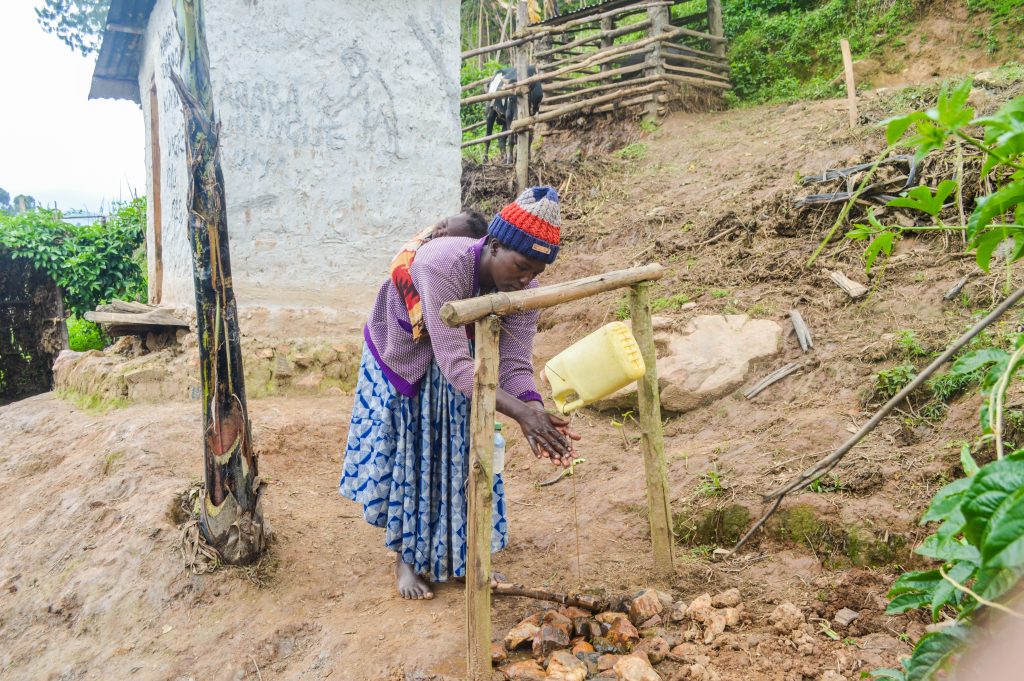
After continuous interaction and WASH trainings with Adrian’s family, they had the urge to improve on the hygiene and sanitation at their home. They were able to construct a proper bathing shelter and a latrine with a sato pan and a tippy tap, they now understand the benefits of hand washing, use SODIS to treat drinking water, and improved sanitation and hygiene around their home also makes them proud. Their grandchildren no longer fall sick and the money that was spent in treating them is now used to venture in income generating projects.

Clean and safe water means healthy families; more money is saved that they can now spend on education, business investments, and thus economic empowerment.

Adrian and Hope are forever grateful to AWS for giving them access to clean and safe water through the rain water harvesting tank and continuous trainings and lessons that helped them improve on the sanitation and hygiene conditions of their home.

Africa Water Solutions logo
ABOUT US
DONATE

africawatersolutions©copyright 2025

Meet Judith

Meet Judith

Judith Wafyoyo’s face lights up when she talks about her home.

Looking back, the state of water, sanitation and hygiene in Judith’s village was dire. She and several other families in her community would walk for hours each day to collect water. The sanitation situation was just as bad. Most toilets did not have roofs, doors or even covers, barely any handwashing facilities and even worse, some people were practising open defecation. Her latrine did not have covering lids. Judith says flies were flying everywhere in her house. They were drinking dirty untreated water causing illnesses in the different families – Judith often had to take her children suffering from water-borne related diseases such as diarrhoea and stomach aches for treatment in nearby clinics.
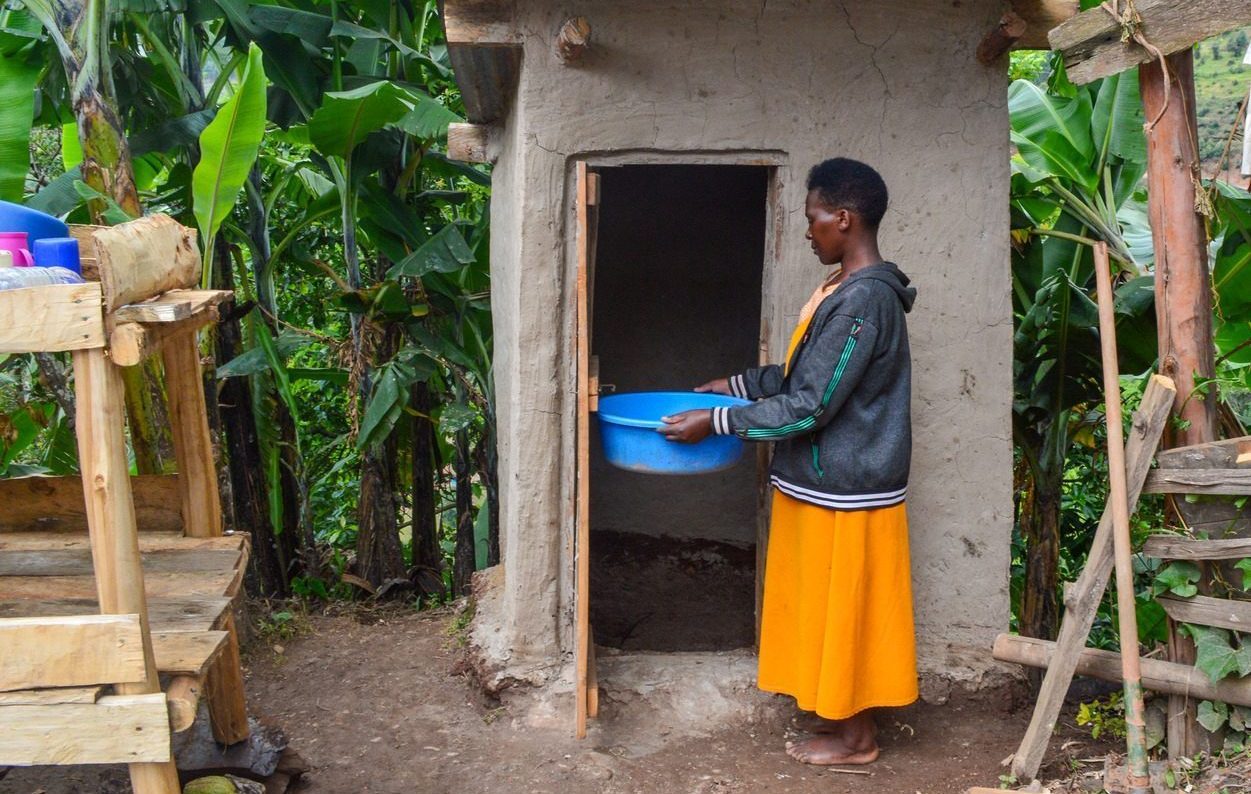
 

Now, Judith is excited when talking about water because she has a water harvesting tank in her compound – giving her a lot of relief. She says, during the rainy season, she shares the water with her immediate neighbours, who replicate the sanitation practices AWS has trained her on. But she is most proud of her new home – having an improved pit latrine fitted with a satopan to keep out flies and odours, a bath shelter and treating their drinking water using SODIS. Together, Judith and her community members have banded in a Village Savings and Loans Association to help them save and borrow money for their small income-generating activities or to meet their other expenses like school fees with much ease.